UNESCO World Heritage Sites (cultural)
If you prefer to view UNESCO listings in list format, then click here.


Baekje Historic Areas
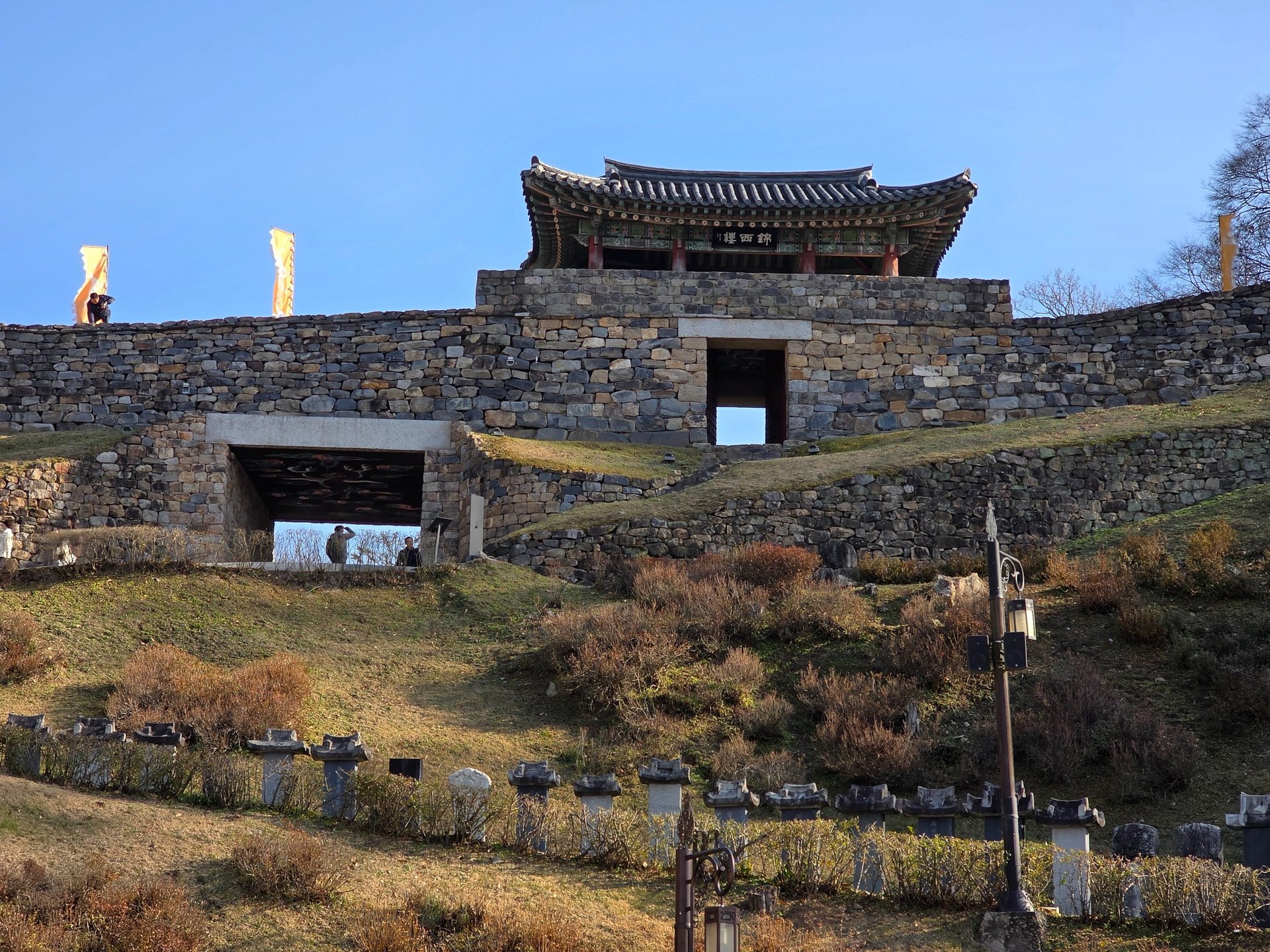
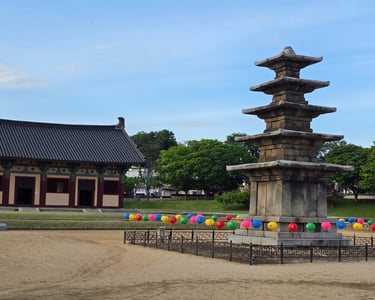
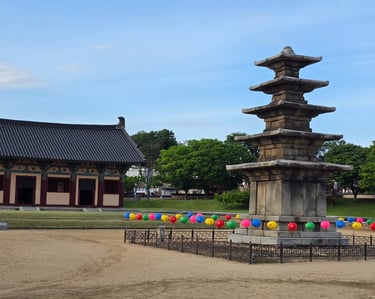
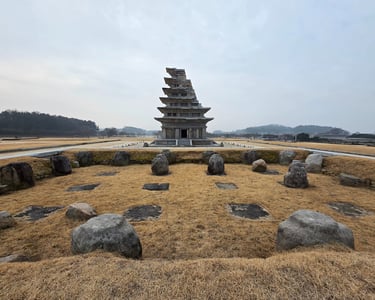
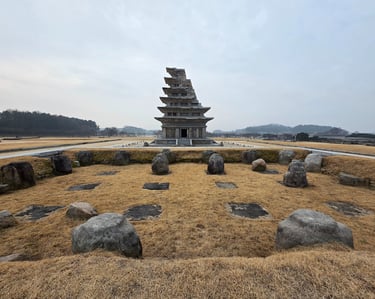
Baekje Historic Areas is made up of diverse sites in three different locations that were capitals during the Baekje Kingdom (18 BCE to 660 CE). Gongsanseong Fortress and the Songsan-ri royal tombs, which includes the tomb of King Muryeong (462–523), are in Gongju. Busosanseong Fortress, the Gwanbuk-ri archaeological site, Jeongnimsa Temple, the Neungsan-ri royal tombs (known locally as Buyeo Royal Tombs Park) and Naseong city wall are in Buyeo, whilst the archaeological site of Wanggung-ri and Mireuksa Temple can be found in Iksan. The sites were listed in 2015 as evidence of the development of building practices stemming from interactions between different kingdoms/countries, evidence of the spread of Buddhism and because they are unique remnants of Baekje culture, religion and art.


Bulguksa Temple and Seokguram Grotto
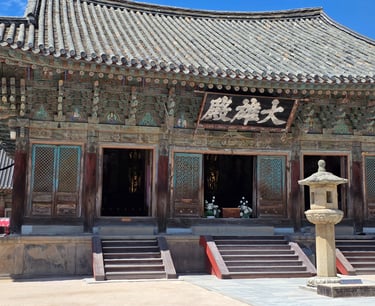
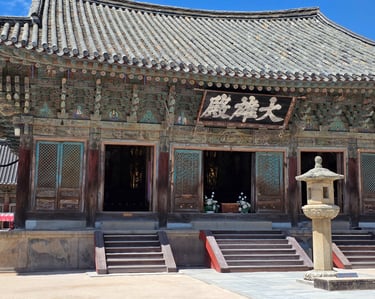
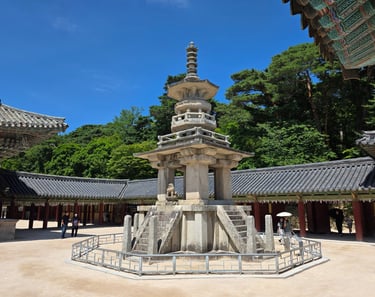
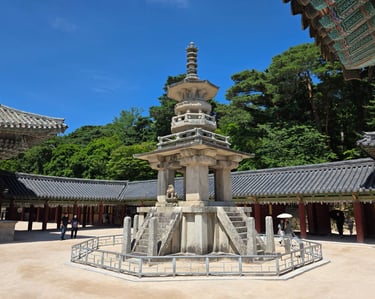
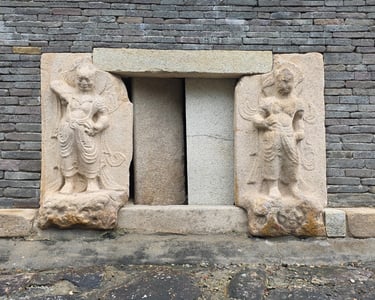
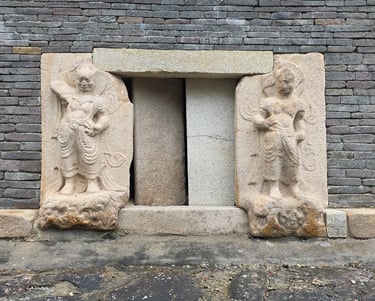
Bulguksa Temple and Seokguram Grotto are located on Mount Tohamsan in Gyeongju National Park and date to the Unified Silla period (676 to 935 CE). Bulguksa Temple is a large Buddhist complex that consists of various wooden buildings as well as the beautiful Dabotap and Seokgatap pagodas. Seokguram Grotto is located further up the mountain and is a small domed grotto area. There you can see a very large statue of the Sakyamuni Buddha as well as many other Buddhist sculptures. The two sites were built to represent the different realms, with Bulguksa Temple representing the earthly realm and Seokguram Grotto representing the heavenly realm. Both sites were listed in 1995 as outstanding examples of Buddhist architecture, whilst Seokguram Grotto was also listed as an East Asian work of art.


Changdeokgung Palace Complex
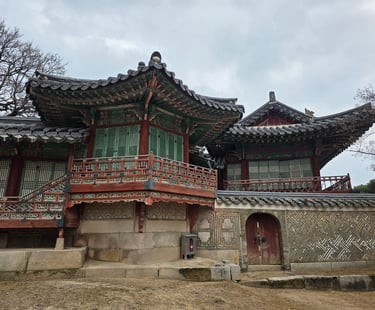
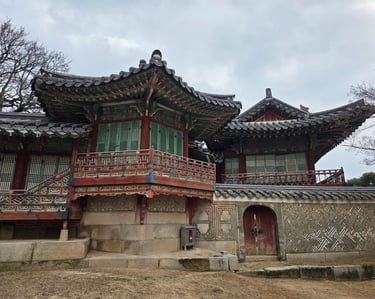
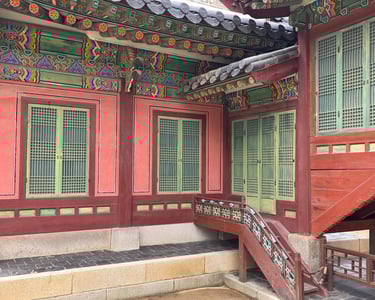
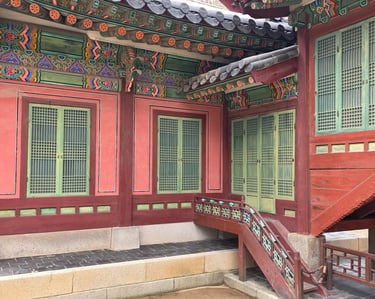
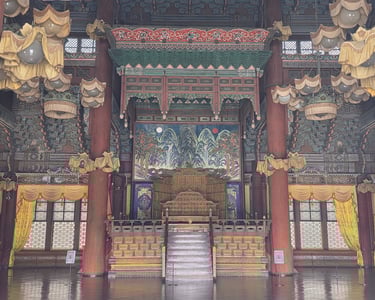
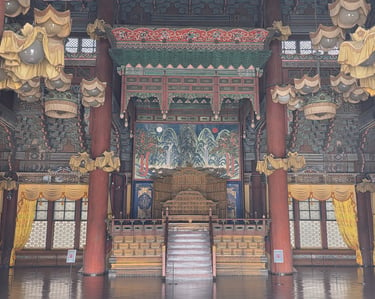
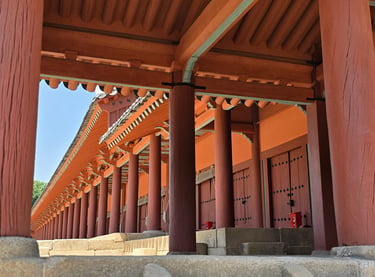
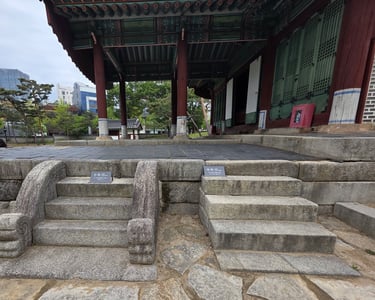
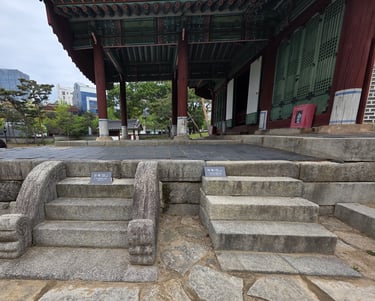
The Joseon Dynasty site of Changdeokgung Palace in Seoul dates to the reign of King Taejong (1400-1418). It was built as a secondary palace but later became the main palace when Gyeongbokgung was destroyed by fire during the Imjin War (1592-1598). The site is almost 60 hectares and is made up of both residential and administrative buildings as well as beautiful garden area known as the Secret Garden. Changdeokgung Palace Complex was inscribed onto the UNESCO World Heritage List in 1995 due to its later influence on architecture, garden design and landscape planning, because it represents traditional pungsu principles (an ancient method to find locations beneficial to prosperity, fortune and health) and Confucianism, and as an outstanding example of East Asian palace architecture and garden design.


Gaya Tumuli
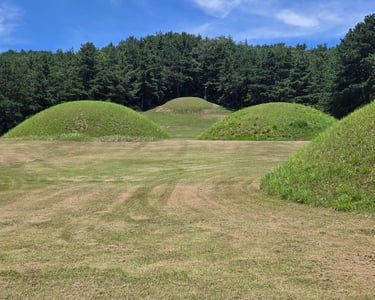
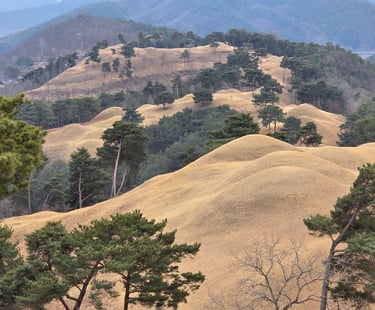
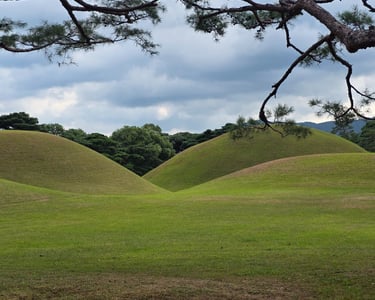
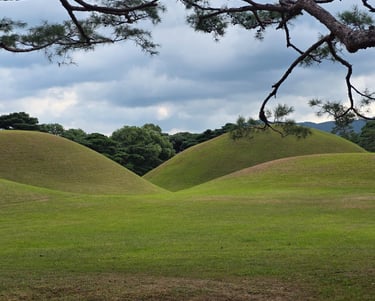
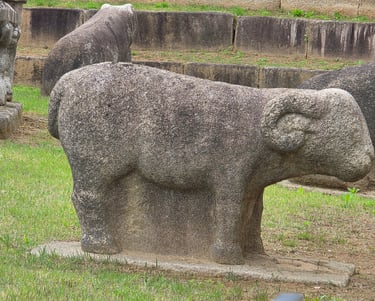
The truly breathtaking Gaya Tumuli consist of seven cemeteries dating from the Gaya Confederacy period (first to the sixth centuries). Separately the cemeteries are known as the Daeseong-dong tumuli, the Gyo-dong and Songhyeon-dong tumuli, the Jisan-dong tumuli (pictured), the Marisan tumuli, the Okjeon tumuli, the Songhak-dong tumuli, and the Yugok-ri and Durak-ri tumuli. Although there are differences between the cemeteries, they also share the same distinct Gaya features, with specific styles of stone burial chamber and pottery. The cemeteries are understood to house the leaders of the different Gaya polities, and the similarity between the separate sites suggests that all held a similar level of power. The Gaya Tumuli were inscribed onto the UNESCO World Heritage List in 2023 due to them being exception evidence of the very distinct Gaya culture.


Gochang, Hwasun and Ganghwa Dolmen Sites
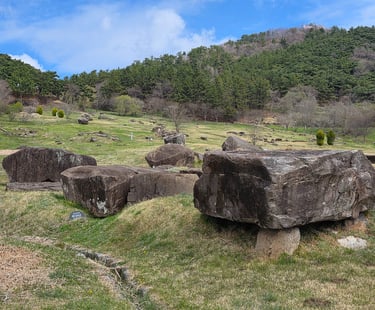
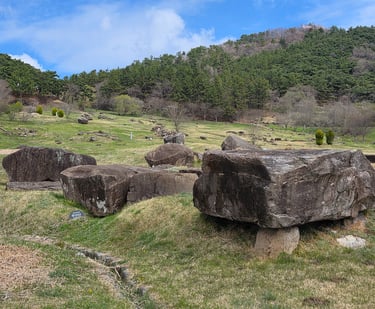
The Gochang, Hwasun and Ganghwa Dolmen Sites date between 1000-1 BCE. These locations contain vast amounts of dolmens, which are large stone structures used in prehistoric burials. The Gochang, Hwasun and Ganghwa dolmen sites are particularly interesting because of the sheer concentration, with the Gochang dolmen site (pictured) having the biggest number. Some of the dolmens are still standing or have been restored to their original form, whilst others just look like piles of large stones and others still just sit as individual stones in vast fields full of dolmen stones. The Gochang, Hwasun and Ganghwa Dolmen Sites were inscribed onto the UNESCO World Heritage List in 2000 as uniquely concentrated examples of megalithic funerary rituals.
Gyeongju Historic Areas
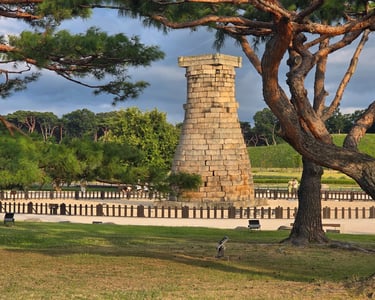
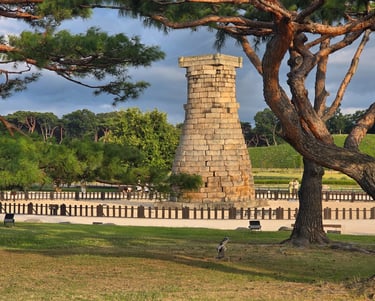
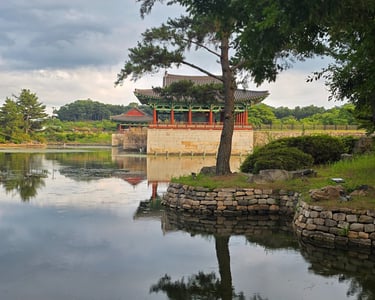
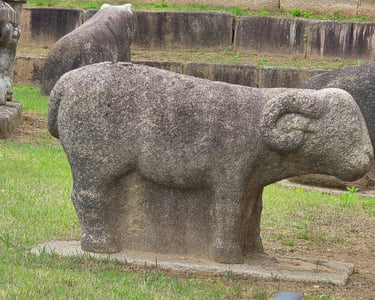
Gyeongju Historic Areas is a concentration of sites dating to the Silla period (1st century BC to 935 CE). that is divided into five different areas or 'belts'. The Hwangnyongsa Belt consists of Bunghwansa Temple and the Hwangnyongsa Temple remains. The Mount Namsan Belt has many sites, including temple ruins, pagodas and tombs. The Sanseong Fortress Belt has defensive remains, whilst the Tumuli Park Belt has numerous royal tombs, including that of King Michu in the Daereungwon Tomb Complex. Finally, the Wolseong Belt consists of Cheomseongdae Observatory, Donggung Palace and Wolji Pond, woodland, and palace ruins. Gyeongju Historic Areas was listed in 2000 due to its significance in the development of architecture and as a testament to the cultural achievements of the Silla period.


Haeinsa Temple Janggyeong Panjeon
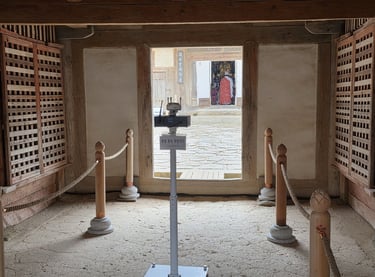
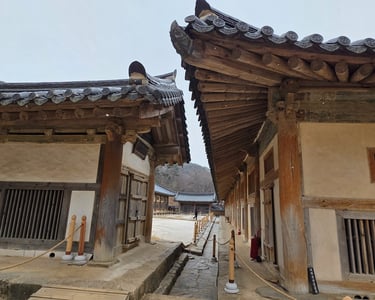
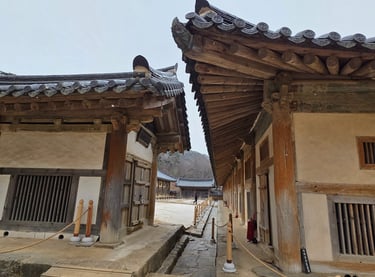
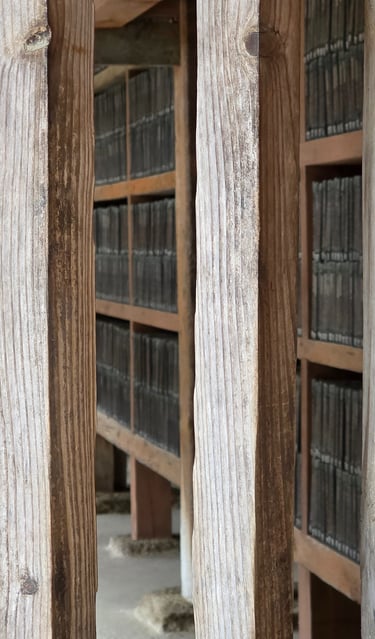
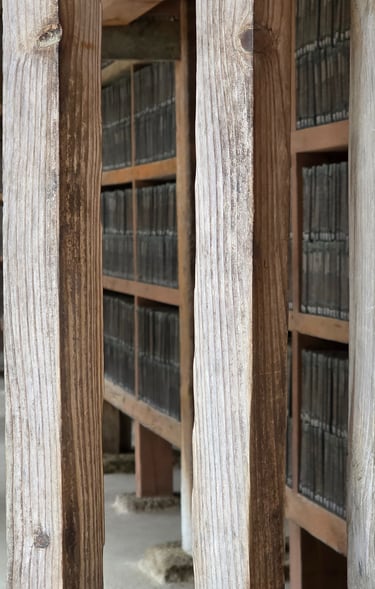
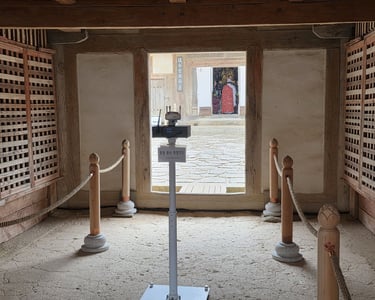
The Janggyeong Panjeon is a beautiful wooden building set within the grounds of Haeinsa Temple on Gayasan Mountain in Hapcheon. It was built during the 15th century to house the 13th century Tripitaka Koreana, a collection of 80,000 woodblocks that are engraved with Buddhist texts and that are inscribed as a UNESCO Memory of the World. The buildings themselves are arranged in a rectangular form with a central courtyard space. There are no enclosed walls to the buildings. Rather the walls consist of open slat like features which surprisingly help to regulate the temperature and humidity, allowing for the continued safeguarding of the woodblocks. The Haeinsa Temple Janggyeong Panjeon was inscribed onto the UNESCO World Heritage List in 1995 due its connection with the Tripitaka Koreana, which is the most complete and accurate collection of Buddhist texts, and for their place in the history of Buddhism.


Historic Villages of Korea: Hahoe and Yangdong
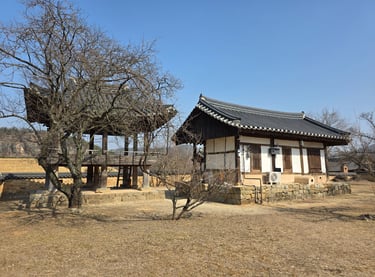
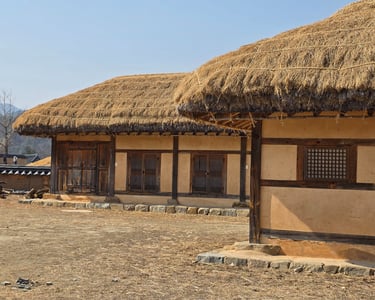
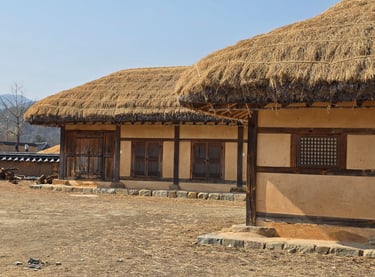
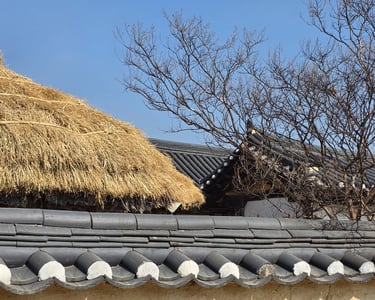
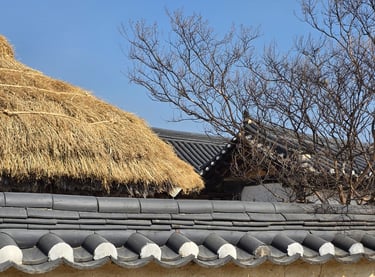
The Historic Villages of Korea: Hahoe and Yangdong consists of two traditional Joseon Dynasty (1392-1897) villages. Hahoe Village is located in Andong, whilst Yangdong Village can be found in Gyeongju, making the two relatively close to each other. Both are clan villages that were established during the 14th and 15th centuries, grew in size until the 19th century and today there are still families living and working in both. There are various types of buildings representing the different social status and endeavours of their inhabitants and both are situated within a wide open landscape with nearby rivers and mountains. Hahoe and Yangdong were inscribed onto the UNESCO World Heritage List in 2010 as well preserved and representative examples of Joseon Dynasty clan villages and as a reflection of Joseon Dynasty social structure and cultural, literary and philosophical traditions.


Hwaseong Fortress
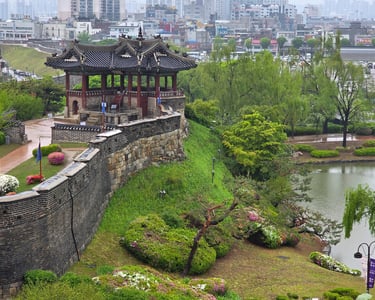
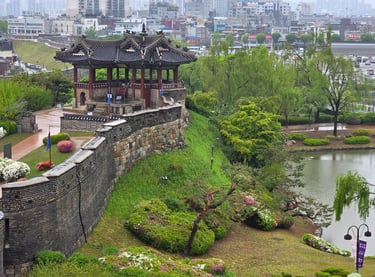
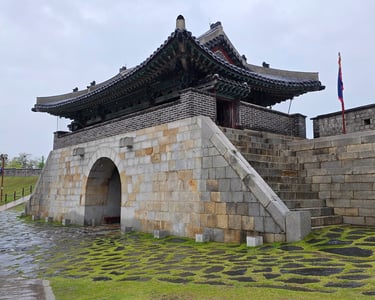
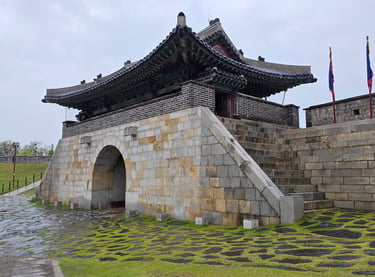
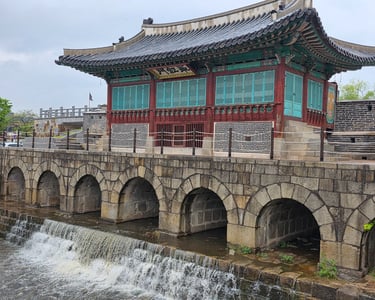
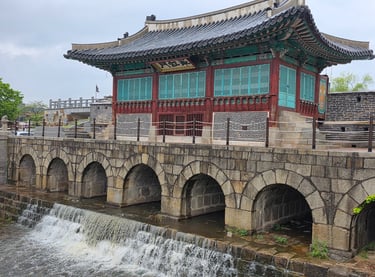
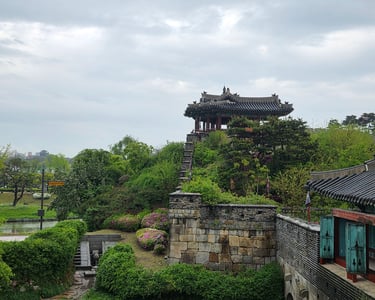
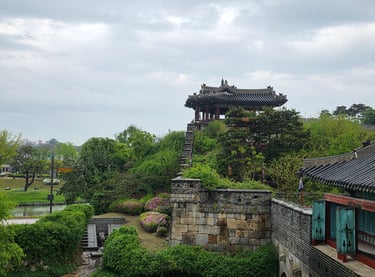
Hwaseong Fortress is an 18th century Joseon Dynasty fortification built by King Jeongjo (1752-1800). It is located in the city of Suwon and stretches over a distance of around 6 kilometres. Many parts of the fortress can still be viewed today, including a very large section of the east wall complete with its pavilions and other architectural features. You can also see other parts of the fortress around the city, including the four main gates, Changnyongmun, Hwaseomun, Janganmun and Paldalmun. Hwaseong Fortress was inscribed on the UNESCO World Heritage List in 1997 as it exemplifies the blending of eastern and western ideas and techniques, which went on to influence developments in arch-itecture, planning and land-scaping. It was also inscribed as an example of the rapid social and technical developments occurring at the time.


Jongmyo Shrine
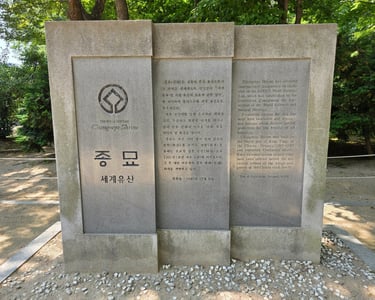
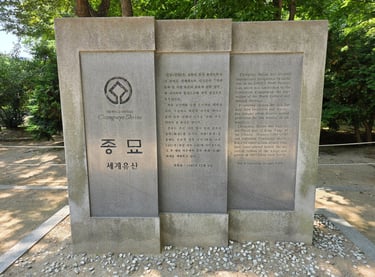
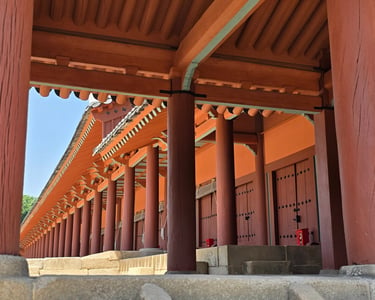
Jongmyo Shrine is the oldest surviving Confucian royal shrine, dating to the late 14th century. As with many other sites, it was destroyed during the 16th century Japanese invasion but it has remained relatively unchanged since it was rebuilt in the 17th century. The shrine maintains its original layout and houses the spirit tablets of Joseon Dynasty kings and queens. The Jongmyo Jerye ancestral rites and its accompanying music, the Jongmyo Jeryeak, are also listed as UNESCO Intangible Cultural Heritage. Jongmyo Shrine was listed in 1995 as an outstanding example of a Confucian royal ancestral shrine however, concerns over the UNESCO status of the site arose late in 2025 with the planned redevelopment of a nearby area, which many believe will impact on its universal value.


Namhansanseong
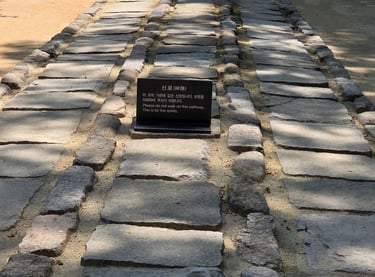
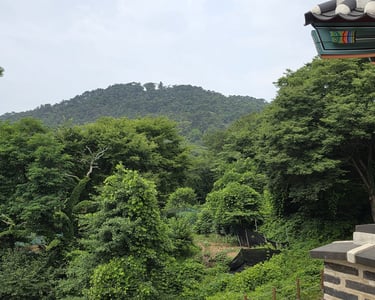
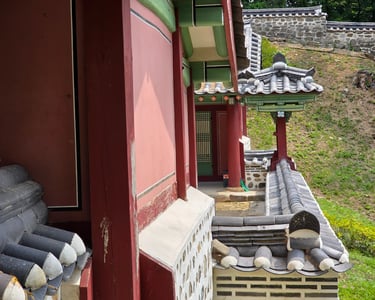
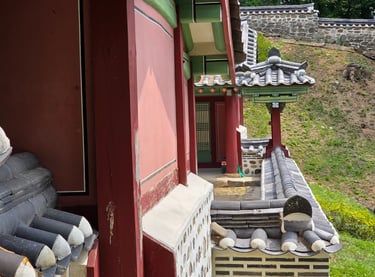
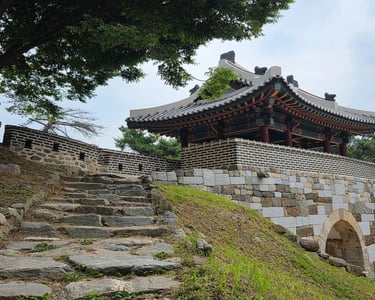
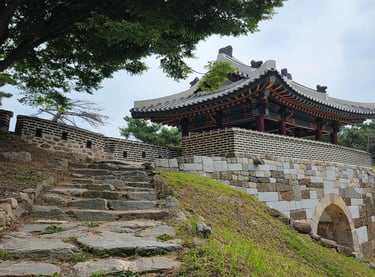
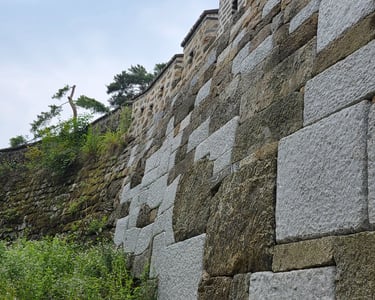
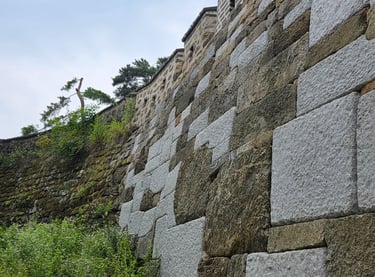
Namhansanseong is a Joseon Dynasty fortress that lies around 15 miles outside of Seoul. It was built as an emergency capital by a Buddhist monk army in the seventeenth century in readiness for a war with the Manchu Qing dynasty. The fortress served as both a defensive structure and a capital capable of housing 4,000 inhabitants. Although many of its structures were destroyed during Japanese occupation and the Korean War, some buildings and the fortress walls survive and today a variety of hiking routes are offered to explore. Namhansanseong was inscribed onto the list in 2014 as evidence of a major change in mountain fortress design that went on to influence future constructions and as an exceptional example of a fortified city.


Petroglyphs along the Bangucheon Stream
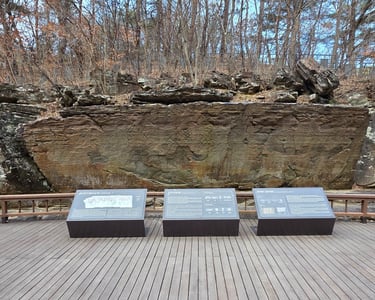
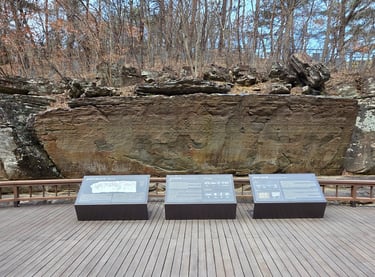
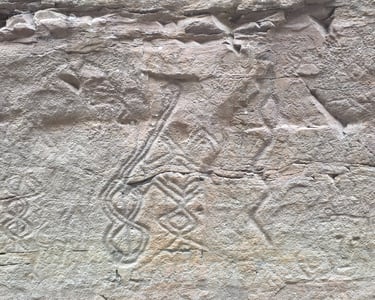
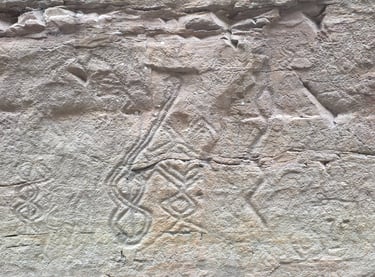
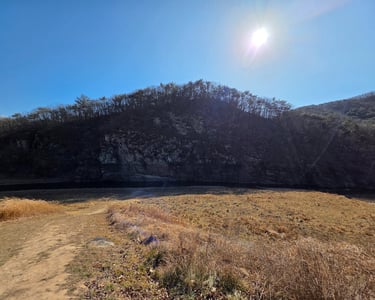
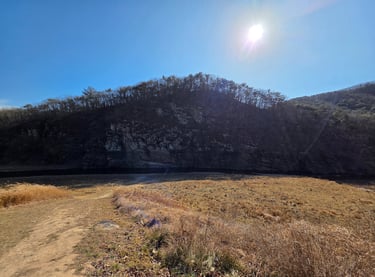
The Petroglyphs along the Bangucheon Stream is comprised of two separate petroglyph sites in Ulsan. The petroglyphs of Cheonjeon-ri are located on an easily visible low rockface and consist of a mixture of images and writings dating from the Neolithic, Bronze Age and Silla periods. The nearby Daegok-ri petroglyphs can be found on a much taller and larger rockface that sits on the opposite side of the stream from the viewing platform and because of the distance they need to be seen from a tower viewer. These petroglyphs are much older, with hundreds of prehistoric drawings, including land and sea animals and hunting scenes. The Petroglyphs along the Bangucheon Stream were inscribed onto the UNESCO World Heritage List in 2025 due to their artistic mastery and creativity and as a complex form of artistic expression that succinctly shows the cultural evolution of local inhabitants.


Royal Tombs of the Joseon Dynasty
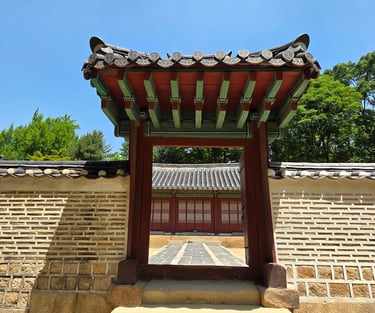
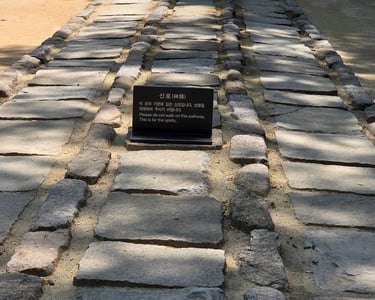
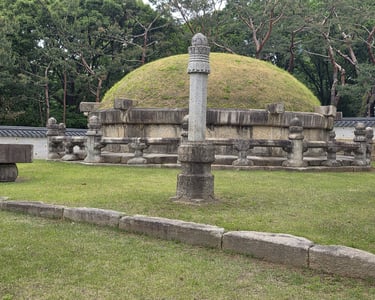
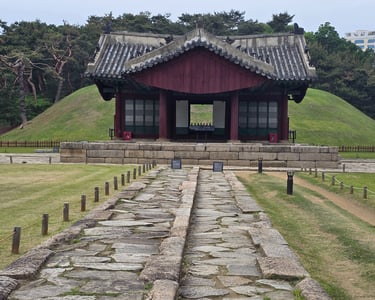
The Royal Tombs of the Joseon Dynasty is a collection of 42 tombs that were built during the Joseon Dynasty (1392-1897) and the Korean Empire (1897-1910). Two of these tombs are in North Korea and it is the 40 tombs which are located in South Korea that are inscribed onto the UNESCO World Heritage list. The tombs are split into 18 different 'clusters' that can be found in Guri (1), Goyang (2), Gimpo (2), Hwaseong (1), Namyangju (3), Paju (2), Seoul (5), Yangju (1) and Yeoju (1). These royal tomb sites are made up of several components, not just a royal tomb, including a shrine, a tomb keeper's house, a shed to house a stele and a gate. The tombs were inscribed onto the list in 2009 due to them representing a specific funerary tradition, as being outstanding architectural landscapes and being associated with the living tradition of conducting ancestral rites.


Sansa, Buddhist Mountain Monasteries in Korea
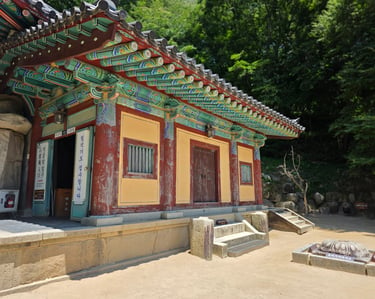
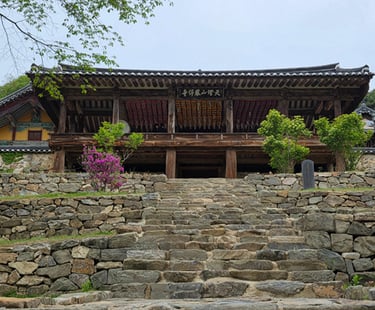
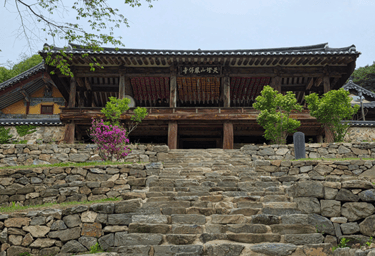
The listing for Sansa, Buddhist Mountain Monasteries in Korea is made up of seven Buddhist monasteries at locations throughout the southern part of the country. The monasteries are Beopjusa (Boeun), Bongjeongsa (Andong, pictured), Buseoksa (Yeongju), Daeheungsa (Haenam), Magoksa (Gongju), Seonamsa (Suncheon) and Tongdosa (Yangsan). All seven were established between the seventh and ninth centuries and share the common architectural characteristics of a central courtyard surrounded by four buildings. The monasteries were inscribed onto the list in 2018 due to them being distinctive Korean representations of Buddhist monastic culture dating from the seventh century to contemporary times.


Seowon, Korean Neo-Confucian Academies
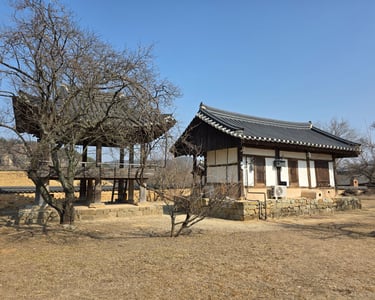
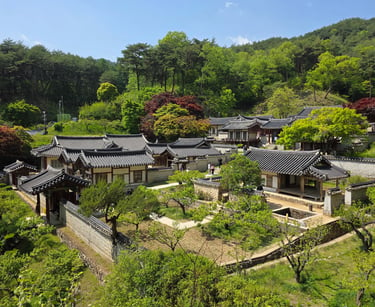
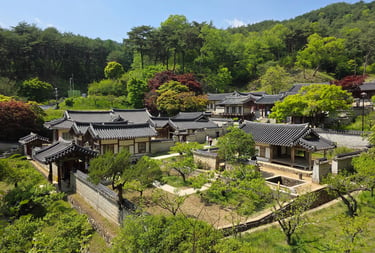
The listing for Seowon, Korean Neo-Confucian Academies is made up of nine different academies located throughout the central and southern regions. These are Byeongsan-seowon (Andong), Dodong-seowon (Daegu), Donam-seowon (Nonsan), Dosan-seowon (Andong, pictured), Museong-seowon (Jeongeup), Namgye-seowon (Hamyang), Oksan-seowon (Oksan), Piram-seowon (Jangseong) and Sosu-seowon (Yeongju). All nine date to the Joseon Dynasty, being established during the sixteenth and seventeenth centuries. The academies were inscribed onto the list in 2019 as outstanding examples of education and social practices associated with Neo-Confucianism in Korea, which was distinct from its original Chinese form.
References/Further Reading
Korea Heritage Service (2006) Baekje Historic Areas.
Korea Heritage Service (2006) Changdeokgung Palace Complex.
Korea Heritage Service (2006) Gaya Tumuli.
Korea Heritage Service (2006) Gochang, Hwasun, and Ganghwa Dolmen Sites.
Korea Heritage Service (2006) Gyeongju Historic Areas.
Korea Heritage Service (2006) Haeinsa Temple Janggyeong Panjeon, the Depositories of the Tripitaka Koreana Woodblocks.
Korea Heritage Service (2006) Historic Villages of Korea: Hahoe and Yangdong.
Korea Heritage Service (2006) Hwaseong Fortress.
Korea Heritage Service (2006) Jongmyo Shrine.
Korea Heritage Service (2006) Namhansanseong.
Korea Heritage Service (2006) Petroglyphs along the Bangucheon Stream.
Korea Heritage Service (2006) Royal Tombs of the Joseon Dynasty.
Korea Heritage Service (2006) Sansa, Buddhist Mountain Monasteries in Korea.
Korea Heritage Service (2006) Seowon, Korean Neo-confucian Academies.
Korea Heritage Service (2006) Seokguram Grotto and Bulguksa Temple.
Korea Heritage Service (2006) World Heritage.
UNESCO (1992-2006) Baekje Historic Areas.
UNESCO (1992-2006) Changdeokgung Palace Complex.
UNESCO (1992-2006) Gaya Tumuli.
UNESCO (1992-2006) Gochang, Hwasun and Ganghwa Dolmen Sites.
UNESCO (1992-2006) Gyeongju Historic Areas.
UNESCO (1992-2006) Haeinsa Temple Janggyeong Panjeon, the Depositories for the Tripitaka Koreana Woodblocks.
UNESCO (1992-2006) Historic Villages of Korea: Hahoe and Yangdong.
UNESCO (1992-2006) Hwaseong Fortress.
UNESCO (1992-2006) Jongmyo Shrine.
UNESCO (1992-2006) Namhansanseong.
UNESCO (1992-2006) Petroglyphs along the Bangucheon Stream.
UNESCO (1992-2006) Republic of Korea.
UNESCO (1992-2006) Royal Tombs of the Joseon Dynasty.
UNESCO (1992-2006) Sansa, Buddhist Mountain Monasteries in Korea.
UNESCO (1992-2006) Seokguram Grotto and Bulguksa Temple.
UNESCO (1992-2006) Seowon, Korean Neo-Confucian Academies.
All photographs taken by the site owner.