UNESCO Memory of the World
If you prefer to view UNESCO protection in list format, then click here.
Annals of the Choson Dynasty
The Annals of the Choson Dynasty, otherwise known as the Joseon Wangjo Sillok, were South Korea's earliest inscription (along with the the Hunminjeongum Manuscript) onto the Memory of the World Register. Inscribed in 1997, the annals are written accounts of Joseon Dynasty history from the reign of its founder, King Taejo right up to its 25th ruler, King Cheoljong, and span more than 470 years. Writings cover a wide variety of areas, including customs, economy, industry, military, politics, religion and social systems. Annals relating to the reign of a specific king were compiled at the request of their successor, using other official records as information sources. Early editions of the annals were transcribed by hand, whilst most later editions were printed using wooden movable type. The National Institute of Korean History provides more in-depth information relating to the annals and their contents.


Archives of the April 19 Revolution
The April 19 Revolution archive was inscribed onto the Memory of the World list in 2023 and comprises a collection of over 1,000 records that document a pro-democracy movement that began with high school students in the city of Daegu on February 28, 1960 and ended with massive demonstrations in Seoul involving people of all ages on April 19, 1960. Official figures suggest that in total, almost 200 people were killed and over 6,000 were injured. The archive includes materials from the National Assembly, political parties and state organisations as well as more personal materials, such as student diaries.


Archives of the Donghak Peasant Revolution
The Donghak Peasant Revolution archive is a collection of 185 documents related to the 1894-1895 peasant uprising that occurred due to peasant farmers suffering forced labour and huge taxes, as well as dealing with corrupt local officials and growing foreign interference. Key to the revolution was the need for social equality and the end of ruling class corruption. The name Donghak, or Eastern Learning, was a social reform movement dating from the 1860s, which sat in direct opposition to Seohak, or Western learning. The archive was inscribed onto the UNESCO Memory of the World list in 2023.


Archives of the KBS Special Live Broadcast "Finding Dispersed Families"
The KBS Special Live Broadcast "Finding Dispersed Families" archive is a huge collecton of some 20,000+ live broadcast recordings and related items produced by the Korean Broadcasting System (KBS). This special broadcast was shown daily between June 30 and November 14, 1983 and the archive relates specifically to reunions of families that were separated since Japanese colonial rule. According to KBS statistics, there were over 100,000 reunion applicants and over 53,000 participants in the programme, whilst over 10,000 families were reunited. The archive was inscribed onto the UNESCO Memory of the World list in 2015. Many of the original broadcasts and other archival materials are still available to view on the KBS Archive website.


Archives of the National Debt Redemption Movement
The archives of the National Debt Redemption Movement is a collection of almost 2,500 documents that record a public campaign that took place between 1907 and 1910 to help the government repay a debt to Japan in an attempt to avoid colonisation. The movement began in the city of Daegu and spread across the country, although there were attempts to intervene and to surpress its leadership. The archive includes materials relating to both the background and beginnings of the movement, as well as its impact. Korean, Japanese governmental and other documentation is included. The archive was inscribed onto the UNESCO Memory of the World list in 2017 and specific information relating to the movement is available on the National Debt Redemption Movement website.


Archives of Saemaul Undong (New Community Movement)
The Archives of the Saemaul Undong, which translates to the New Community Movement, provide a record of the events which took place between 1970 and 1979 that transformed and modernised South Korea from one of the poorest countries in the world into a successful economy - events that have been seen as a model for developing countries throughout the world. The archive consists of various types of evidence, from presidential and government level through to village and business specific evidence and right down to individual materials, and includes both written and visual records. The Saemaul Undong Archive was inscribed onto the UNESCO Memory of the World list in 2013.


Baegun hwasang chorok buljo jikji simche yojeol (vol.II)
The Baegun hwasang chorok buljo jikji simche yojeol is an anthology of Zen Buddhist scriptures that was inscribed onto the UNESCO Memory of the World List in 2001. The scriptures, which are also known as either the Jikji Simche Yojeol or the Jikji, date to the Goryeo Dynasty (1377) and were printed at Heungdeoksa Temple in Cheongju using moveable metal type. The book originally comprised of two volumes, but only the second volume exists today. It is the earliest known surviving book in the world that was printed using movable metal type.


Confucian Printing Woodblocks in Korea
The Confucian Printing Woodblocks of Korea is a massive collection of over 64,000 hand-carved wood blocks which were used in the printing of 718 Joseon Dynasty dated books. Included in those are 583 collections of Confucian scholarly writings on a variety of subjects, 52 books on Neo-Confucianism, 32 genealogies or chronologies, 19 ritual study books, 18 history books, 7 children's books and 3 geography books. Although produced by different local communities, the woodblocks survived as they were preserved by clans and seowon (Confucian academies) before passing into the care of the Advanced Center for Korean Studies. The woodblocks were inscribed onto the UNESCO Memory of the World list in 2015.


Documents on Joseon Tongsinsa / Chosen Tsushinshi: The History of Peace Building and Cultural Exchanges between Korea and Japan from the 17th to 19th Century
Joseon Tongsinsa were diplomatic missions sent by Joseon to Japan between 1607 and 1811 as part of efforts to maintain a peaceful relationship. This archive contains materials related to 12 such missions. Evidence, which is held in both South Korea and Japan, consists of diplomatic documents, travel records and records of cultural exchanges, which includes calligraphy and paintings. The Joseon Tongsinsa / Chosen Tsushinshi documents were inscribed onto the UNESCO Memory of the World list in 2017.


Donguibogam: Principles and Practice of Eastern Medicine
Donguibogam: Principles and Practice of Eastern Medicine is a medical encyclopaedia and is Korea's oldest medical book. The royal physican Jun Heo began assembling the book in 1596, but progress ceased due to the Imjin War and he did not complete it until 1610. The book was published three years later. It includes various areas of medical knowledge as well as treatments. The book's twenty five volumes were divided into five sections on internal organs, the external human body, various diseases, herbal medicine and acupuncture. Donguibogam was well respected due to its high level of medical knowledge, so was also much sought after by China and Japan. It was inscribed onto the UNESCO Memory of the World list in 2009.


Human Rights Documentary Heritage 1980 Archives for the May 18th Democratic Uprising against Military Regime, in Gwangju, Republic of Korea
Events that occurred in Gwangju are a very recent demonstration of South Korea's difficult past. In 1979, President Park Chung-Hee, who had gained power following a 1961 military coup, was assasinated and it was believed that democracy would follow, but the head of the Defense Security Command, Chun Doo-Hwan, orchestrated a coup and declared martial law which led to countrywide demonstrations. Special forces were dispatched to Gwangju to surpress a peaceful protest, and used force resulting in many deaths and injuries. The archive inscribed by UNESCO in 2011 is made up of assorted documentary evidence, some of which can be viewed today in Gwangju's Jeonil 245 Building, which still bears the bullet holes from shots fired from a forces helicopter on May 18th, 1980.


Hunminjeongum Manuscript
The Hunminjeongum Manuscript was inscribed onto the UNESCO Memory of the World in 1997. It is a book that explains the principles, purpose and use of Hunminjeongum, which is the original name of Hangeul, the Korean alphabet. The name Hunminjeongum actually means 'proper sounds for the instruction of the people' and it was not until the early twentieth century that the name Hangeul was used. King Sejong created Hangeul in 1443 to help those who found it difficult to read Chinese characters, and according to King Sejong's Annals, the manuscript itself was pubished in 1446.


Ilseongnok: Records of Daily Reflections
Ilseongnok: Records of Daily Reflections began with the personal diary entries of King Jeongjo, who was the twenty-second Joseon Dynasty monarch. He ruled from March 1776 to August 18, 1800 but his reflections began at a much younger age. When he became King, Jeongjo continued to write but eventually (in 1783) gave this task to the Royal Library, although their writings required the King's final approval. Later kings continued this tradition, leading to 2,329 volumes being produced over a period of 151 years. Subjects mentioned include details of commoner petitions and their measures as well as east-west interactions and exchanges, providing invaluable insights into significant cultural shifts and other events taking place. Ilseongnok: Records of Daily Reflections were inscribed onto the UNESCO Memory of the World list in 2011.


Korea Reforestation Archives: A reforestation model achieved through public-private governance
The Korea Reforestation Archive provides evidence of South Korea's very successful reforestation attempts since the passing of its 1961 Forestry Act. The archive consists of 9,619 documents and photographs sourced from government, organisations and individuals. In 1973, the country put its First Ten-Year Forest Rehabilitation Plan into action, encouraging and incentivising participation and the project, and this model is seen as best practice in terms of a public-private partnership that led to the successful transformation of forest landscapes in South Korea. Today, materials from the archive are used internationally to assist with forest related initiatives. The archive was inscribed onto the UNESCO Memory of the World list in 2025.


Nanjung Ilgi: War Diary of Admiral Yi Sun-sin
The Nanjung Ilgi is the seven volume handwritten diary of Admiral Yi Sun-sin, a Joseon navy commander and national hero. The diary was written during the Imjin War, which took place between 1592 and 1598. There are many recorded engagements with the Japanese navy during this period and Admiral Yi Sun-shin repeatedly led the Joseon navy to success. Diary entries were made almost daily from January 1952 until shortly before his death during the Battle of Noryang on December 16, 1598, which was Joseon's final successful naval battle of the war. Information included in the diary includes the Admiral's personal feelings and observations, as well as combat and topographical information. The Nanjung Ilgi was inscribed onto the UNESCO Memory of the World list in 2013.


Printing woodblocks of the Tripitaka Koreana and miscellaneous Buddhist scriptures
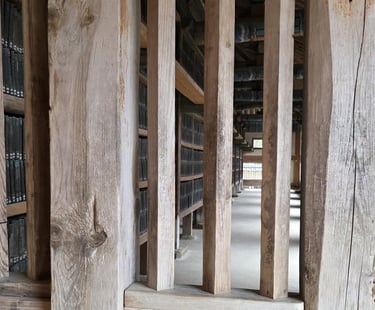
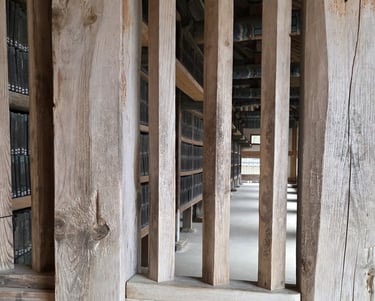
The printing woodblocks of the Tripitaka Koreana and miscellaneous Buddhist scriptures is a collection of Buddhist scriptures carved onto over 80,000 wooden blocks which date to the Goryeo Dynasty (918-1392). At the same time of the Tripitaka Koreana commission, which was 1236, Haeinsa Monastery also commissioned some Buddhist scriptures, and these are included in the listing. Both the Tripitaka Koreana and the miscellaneous Buddhist scriptures have been housed in the open air Janggyeong Panjeon at Haeinsa Temple in Hapcheon since 1398 and you can still see them there today. Prior to this, the Tripitaka Koreana had been kept on Ganghwa-do. The printing woodblocks of the Tripitaka Koreana and miscellaneous Buddhist scriptures were inscribed onto the UNESCO Memory of the World list in 2007.
Revealing Truth: Jeju 4·3 Archives
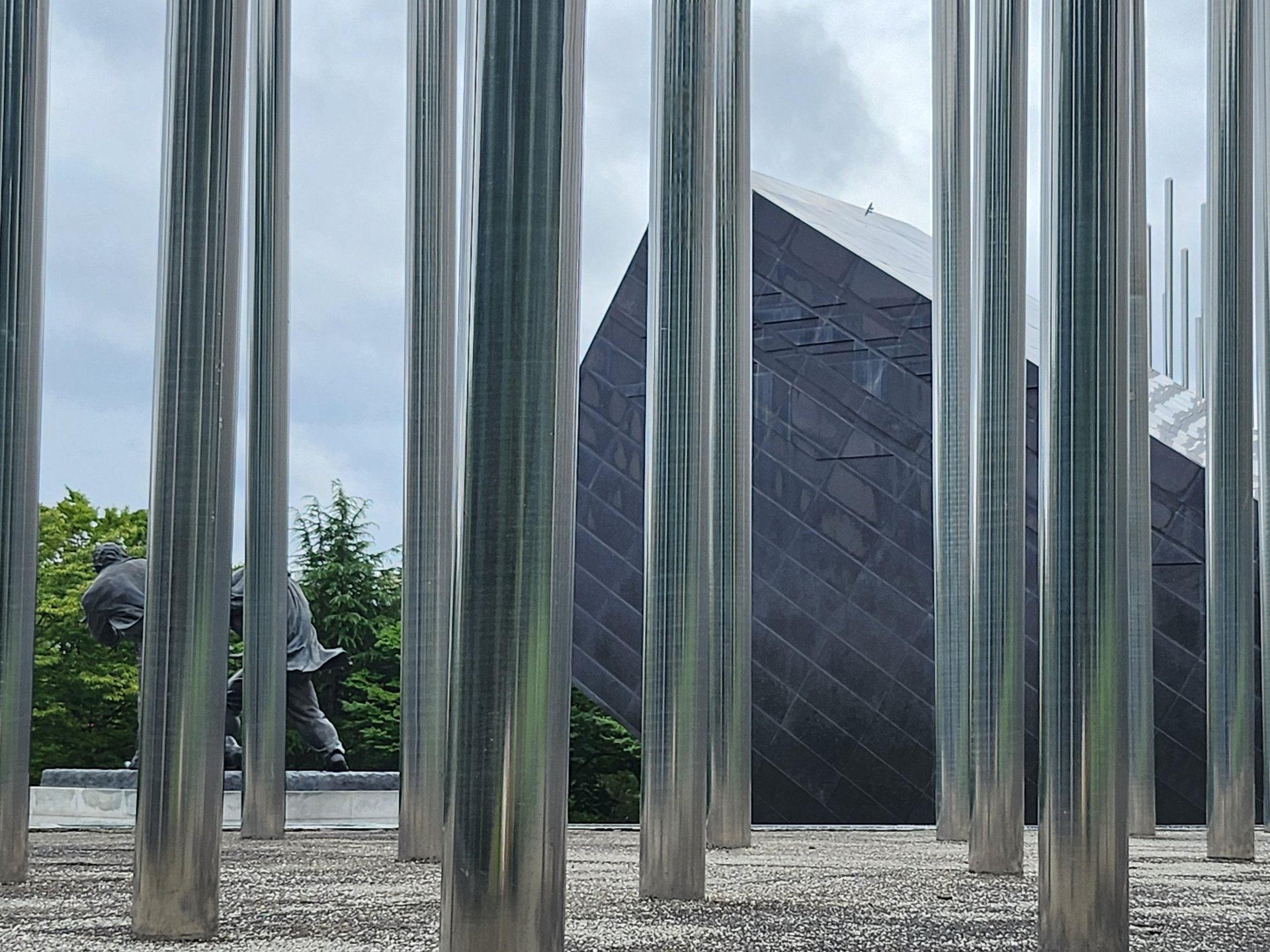
The Jeju 4·3 Archives document another event in South Korea's difficult past. The archive consists of some 14,673 documents that relate to an armed uprising that began on April 3, 1948. The uprising was led by the Jeju-do branch of the South Korean Labor Party but became more widespread and led to mass atrocities. The archive contains evidence from the parties involved including books, official documents, pamphlets, postcards, videos and audiotapes that relate to four main areas: prisoners sentenced by court martial, testimonies of victims and the bereaved, civil movements for truth and reconciliation and state investigations into truth. The archive was inscribed onto the UNESCO Memory of the World list in 2025.


Royal Seal and Investiture Book Collection of the Joseon Dynasty
The Royal Seal and Investiture Book Collection of the Joseon Dynasty is a collection of 312 royal seals, 288 investiture books and 28 royal edicts that cover the whole Joseon Dynasty - a period of around 570 years. Seals were made of gold, silver or jade and they were used in royal family rituals whilst investiture books recorded important lifetime events. The Royal Seal and Investiture Book Collection of the Joseon Dynasty were inscribed onto the UNESCO Memory of the World list in 2017.

Seungjeongwon Ilgi, the Diaries of the Royal Secretariat
The Seungjeongwon Ilgi are the diaries of the Joseon Dynasty's Royal Secretariat and they record much detailed information on important court matters. They date from the seventeenth century right through to the twentieth century, the first being produced on April 12, 1623 and the last being produced on August 29, 1910. The Royal Secretariat comprised six royal secretaries and two scribes and they had the responsibility of recording all of the King's daily events, resulting in some 3,243 volumes surviving today, although others have been lost over the years. The Seungjeongwon Ilgi were inscribed onto the UNESCO Memory of the World list in 2001.


Uigwe: The Royal Protocols of the Joseon Dynasty
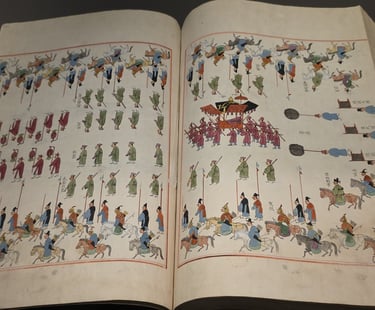
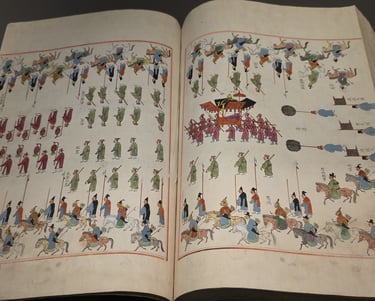
Uigwe are a unique and invaluable documentary archive that sets out royal protocols over the course of the Joseon Dynasty. The word Uigwe means a model of rituals, and there are almost 4,000 surviving Uigwe dating back to 1601. Uigwe prior to this date were lost when they were burned during the Imjin War, which took place in the last decade of the sixteenth century. Each Uigwe sets out different aspects of ceremonial conduct using both written descriptions and pictures, offering a vivid picture of specific areas of royal life. Uigwe fall into different categories and include those for royal sponsored official banquets (binrye), rites between people (garye), rites for non-humans (gilrye), ceremonial rites (gunrye), and funerary rites (hyungrye). Uigwe: The Royal Protocols of the Joseon Dynasty were inscribed onto the UNESCO Memory of the World list in 2007.
References/Further Reading
Busan Cultural Foundation and The Liaison Council of All Places Associated with Chosen Tsushinshi (2016) Nomination Form - International Memory of the World Register (Documents on Joseon Tongsinsa/Chosen Tsushinshi: The History of Peace Building and Cultural Exchanges between Korea and Japan from the 17th to 19th Century). https://media.unesco.org/sites//korea_japan_joseon_en.pdf
Cultural Heritage Admministration (2014) Nomination Form - International Memory of the World Register (Confucian Printing Woodblocks in Korea). https://media.unesco.org/sites/default/files/webform/mow001/korea_woodblocks_eng.pdf
International Centre for Documentary Heritage under the auspices of UNESCO (2023) MoW International Registers - Ilseongnok: Records of Daily Reflections. https://www.unescoicdh.org/eng/ilseongnok
Jeju Special Self-Governing Provincial Government and Jeju 4·3 Peace Foundation (2023) Nomination Form - International Memory of the World Register (Revealing Truth: Jeju 4·3 Archives). Download available at: https://www.unesco.org/en/memory-world/revealing-truth-jeju-43-archives
KBS (n.d.) KBS Finding Dispersed Families. http://english.kbsarchive.com/
Korea Heritage Service (2006) Archives of the Donghak Peasant Revolution. https:english.khs.go.kr/cop/bbs/donghak
Korea Heritage Service (2006) Baegun hwasang chorok buljo jikji simche yojeol (Anthology of Great Buddhist Priests’ Zen Teachings). https:english.khs.go.kr/chaen/search/select/baegun
Korea Heritage Service (2006) Dongui bogam (Principles and Practice of Eastern Medicine). https:english.khs.go.kr/chaen/search/select/donguibogam
Korea Heritage Service (2006) Human Rights Documentary Heritage 1980 Archives for the May 18th Democratic Uprising against Military Regime, in Gwangju, Republic of Korea. https:english.khs.go.kr/chaen/select/gwangju
Korea Heritage Service (2006) Haeinsa Temple Janggyeong Panjeon, the Depositories of the Tripitaka Koreana Woodblocks. https://english.khs.go.kr/cop/bbs/select/haeinsa
Korea Heritage Service (2006) Hunminjeongeum Manuscript. https:english.khs.go.kr/cop/bbs/hunminjeongeum
Korea Heritage Service (2006) Nanjung Ilgi : War Diary of Admiral Yi Sun-sin. https:english.khs.go.kr/cop/bbs/nanjungilgi
Korea Heritage Service (2006) Royal Seal and Investiture Book Collection of the Joseon Dynasty. https:english.khs.go.kr/cop/bbs/royalseal
Korea Heritage Service (2006) Seungjeongwon ilgi (Diaries of the Royal Secretariat). https:english.khs.go.kr/chaen/search/select/seungjeongwon
Korea Heritage Service (2006) The Annals of the Joseon Dynasty. https:english.khs.go.kr/chaen/select/annals
Korea Heritage Service (2006) The Archives of the KBS Special Live Broadcast "Finding Dispersed Families". https://english.khs.go.kr/cop/bbs/findingdispersedfamilies
Korea Heritage Service (2006) The Archives of the National Debt Redemption Movement. https:english.khs.go.kr/cop/bbs/nationaldebtredemption
Korea Heritage Service (2006) Uigwe, the Royal Protocols of the Joseon Dynasty. https:english.khs.go.kr/cop/bbs/uigwe
Korea Society on Forest Policy (2023) Nomination Form - International Memory of the World Register (Korea Reforestation Archives: A reforestation model achieved through public-private governance). Download available from: https://www.unesco.org/en/memory-world/korea-reforestation-archives-reforestation-model-achieved-through-public-private-governance
National Debt Redemption Movement (n.d.) The National Debt Redemption Movement. http://www.gukchae-archive.org/ge/
National Institute of Korean History (n.d.) Introduction to the Annals of the Joseon Dynasty. https://sillok.history.go.kr/intro/english.do
National Library of Korea (n.d.) Donguibogam: the Korean Traditional Medicine book. https://www.nl.go.kr/EN/contents/EN30701000000.do
National Museum of Korea (2011) Answers about the "Uigwe". https://www.museum.go.kr/ENG/contents/answersabouttheuigwe
UNESCO (n.d.) Archives of Saemaul Undong (New Community Movement). https://www.unesco.org/en/memory-world/archives-saemaul-undong-new-community-movement
UNESCO (n.d.) Confucian Printing Woodblocks. https://www.unesco.org/en/memory-world/confucian-printing-woodblocks?hub=1081
UNESCO (n.d.) Documents on Joseon Tongsinsa/Chosen Tsushinshi : The History of Peace Building and Cultural Exchanges between Korea and Japan from the 17th to 19th Century. https://www.unesco.org/en/memory-world/documents-joseon-tongsinsa/chosen-tsushinshi-history-peace-building-and-cultural-exchanges-between
UNESCO (2026) Memory of the World. https://unesco.or.kr/eng/mow/
UNESCO (n.d.) Korea Reforestation Archives: A reforestation model achieved through public-private governance. https://www.unesco.org/en/memory-world/korea-reforestation-archives-reforestation-model-achieved-through-public-private-governance
UNESCO (n.d.) Nanjung Ilgi: War Diary of Admiral Yi Sun-sin. https://www.unesco.org/en/memory-world/nanjung-ilgi-war-diary-admiral-yi-sun-sin
UNESCO (n.d.) Printing woodblocks of the Tripitaka Koreana and miscellaneous Buddhist scriptures. https://www.unesco.org/en/memory-world/printing-woodblocks-tripitaka-koreana-and-miscellaneous-buddhist-scriptures
UNESCO (n.d.) Revealing Truth: Jeju 4·3 Archives. https://www.unesco.org/en/memory-world/revealing-truth-jeju-43-archives
All photographs taken by the site owner.