
Fortresses
Busosanseong Fortress
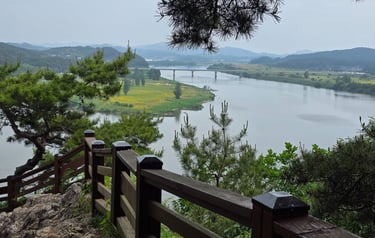
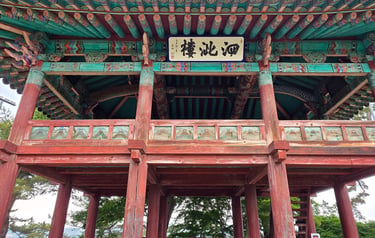
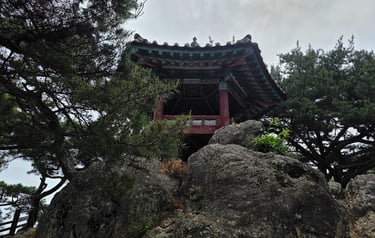
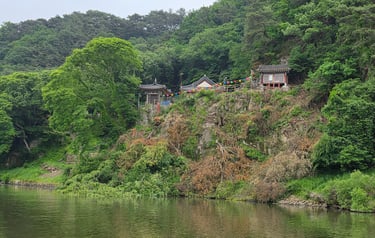
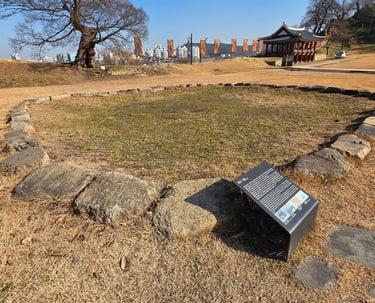
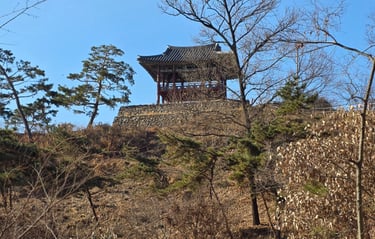
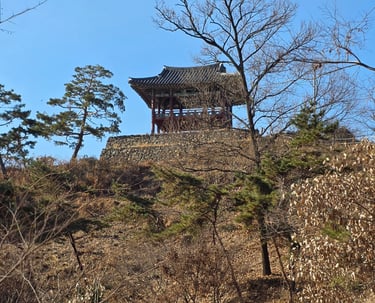
Busosanseong Fortress is the largest of Buyeo's five named UNESCO World Heritage Sites that form part of the listing for Baekje Historic Areas along with sites in Gongju and Iksan. The fortress sits in stunning surroundings on Mount Busosan and was built in 538, when Sabi (present day Buyeo) became the Baekje Kingdom capital. Traces of Baekje period structures include a military depot and some of its main gates, but the site also contains more recent structures. Baekwajeong Pavilion on Nakhwaam Rock was built to commemorate Baekje royal court women who are said to have thrown themselves off Nakhwaam when an invasion ended in defeat, Sabiru Pavilion sits on the highest peak and Yeongillu Pavilion is located at an area where royals are known to have gathered. You can access Busosanseong through its main entrance or take a boat from nearby Gudeurae Ferry Dock and disembark at Goransa Temple.
Geumjeongsanseong Fortress
COMING SOON
Gochangeupseong Fortress
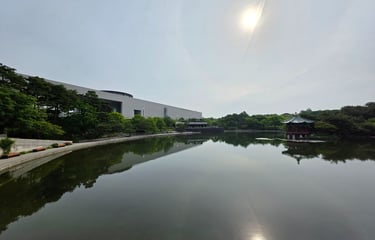
Gochang-eup Fortress, also known as Gochang Walled Town or Moyang Fortress, is a huge 165,000+ metre fortress that was originally built in 1453. Most of the buildings were destroyed during times of war and the site was restored in 1976. Today you can see a variety of different buildings, such as a jail, command headquarters and administrative buildings, as well gates, gatehouses, ponds, moats and 4-6 metre high walls. Several historical dramas have been filmed at the site, and information boards next to relevant buildings give details of some. Just outside the main fortress entrance gate can be found the living quarters of Sin Hae-hyo (1812-1884), a writer and pansori (musical storytelling) critic which dates to the nineteenth century. A great place to explore or even to climb the outer walls.
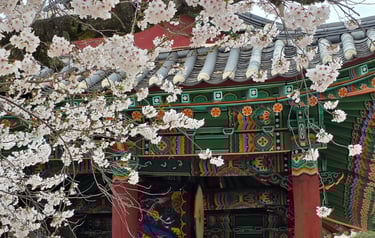
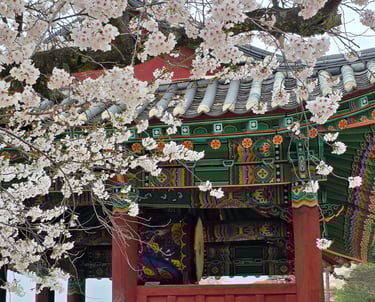
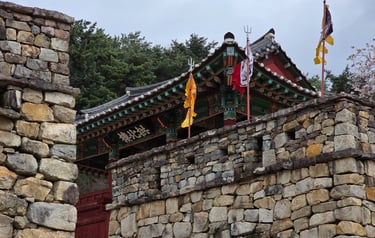
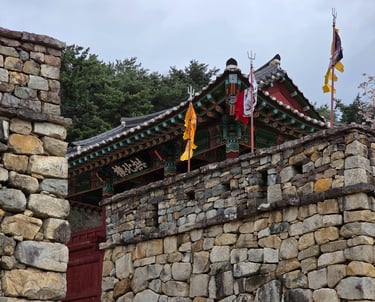
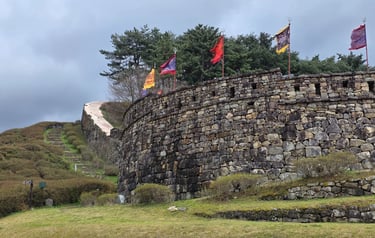
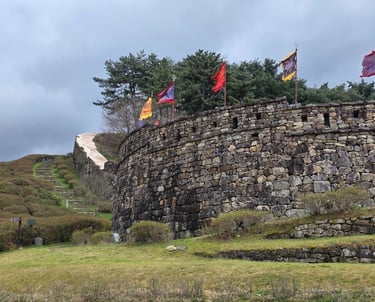
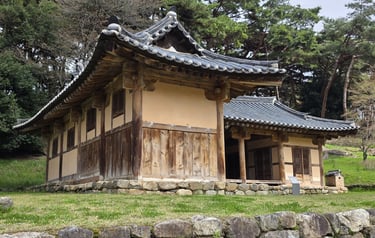
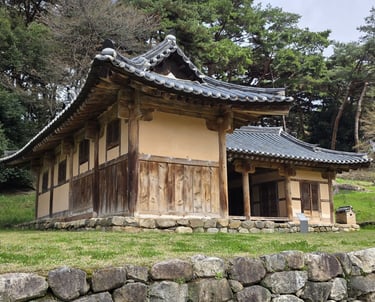
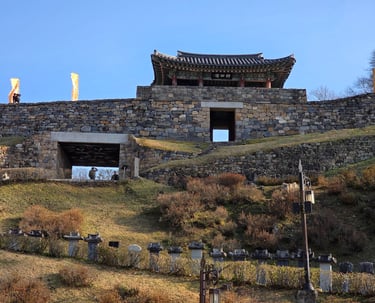
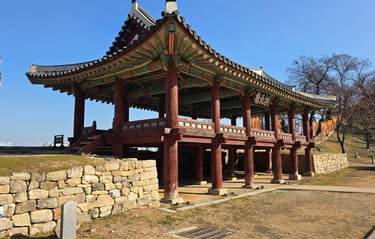
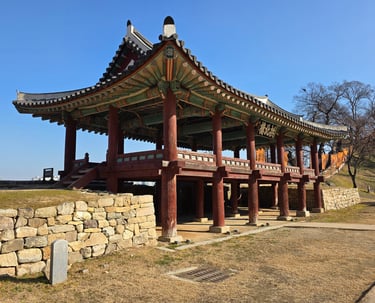
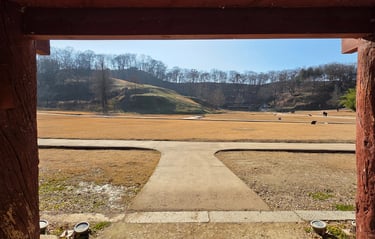
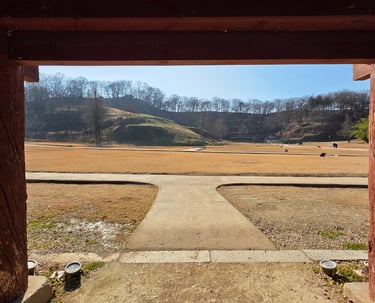
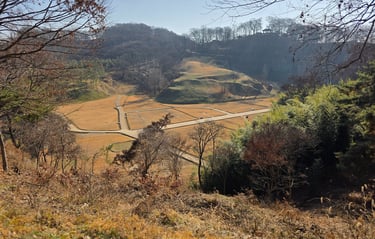
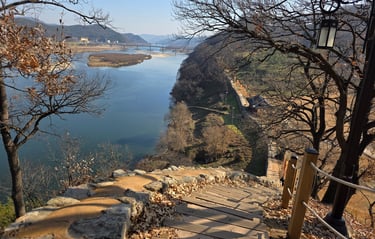
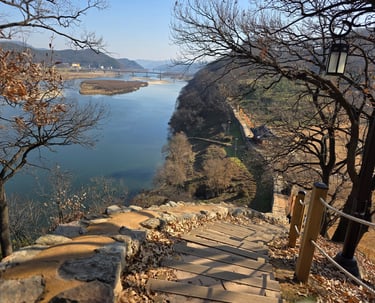
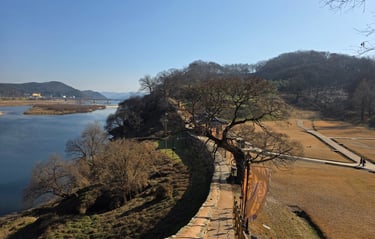
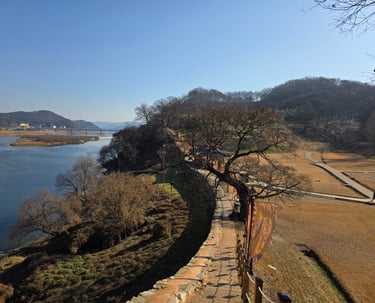
The fortress sits right next to Gongju’s Geumgang River so there are many beautiful scenic views. Amongst the Baekje remnants you can see fortress walls, gates, pavilions, a pond, a commemorative inscription, a temple and a palace site. The fortress was also used during the Goryeo Dynasty and Joseon Dynasty and it is known that King Injo (1595-1649) of the Joseon Dynasty temporarily stayed in Ssangsujeong Pavilion, which still survives today. It is possible to walk around the whole site, which takes around an hour but it can much longer if you wish to fully investigate all of the different places. It is worth noting that some areas are original whilst others, such as the east and west gates, have been restored. You can walk to the highest points of the fortress for stunning views of the river and the modern-day city of Gongju. The Tomb of King Muryeong and the Royal Tombs, which are also part of the Baekje Historic Areas, are located just a short distance away.
Gongsanseong Fortress
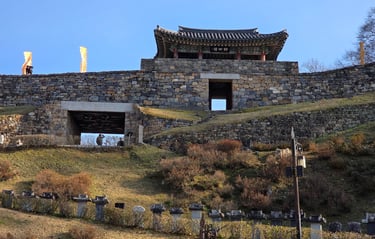
Gongsanseong Fortress in Gongju is one of eight different sites that make up the UNESCO World Heritage Inscription for the Baekje Historic Areas, which also incorporates nearby sites in Buyeo and Iksan. The Baekje Historic Areas were inscribed due to the connections between Korea, China and Japan in terms of the development of building techniques, the expansion of Buddhism, and more generally for Baekje’s exceptional accomplishments in art, culture and religion. The Baekje Kingdom dates from 18 BCE to 660 CE and it was one of what is known as the Three Kingdoms, along with Goguryeo and Silla. The Baekje Kingdom has three periods, which are based on the location of the capital. They are the Hanseong Period (18 BCE to 475 CE), the Ungjin Period (475-538 CE) and the Sabi Period (538 to 660 CE). The present-day cities of those capitals are Seoul (Hanseong), Gongju (Unglin) and Buyeo (Sabi).
Hwaseong Fortress
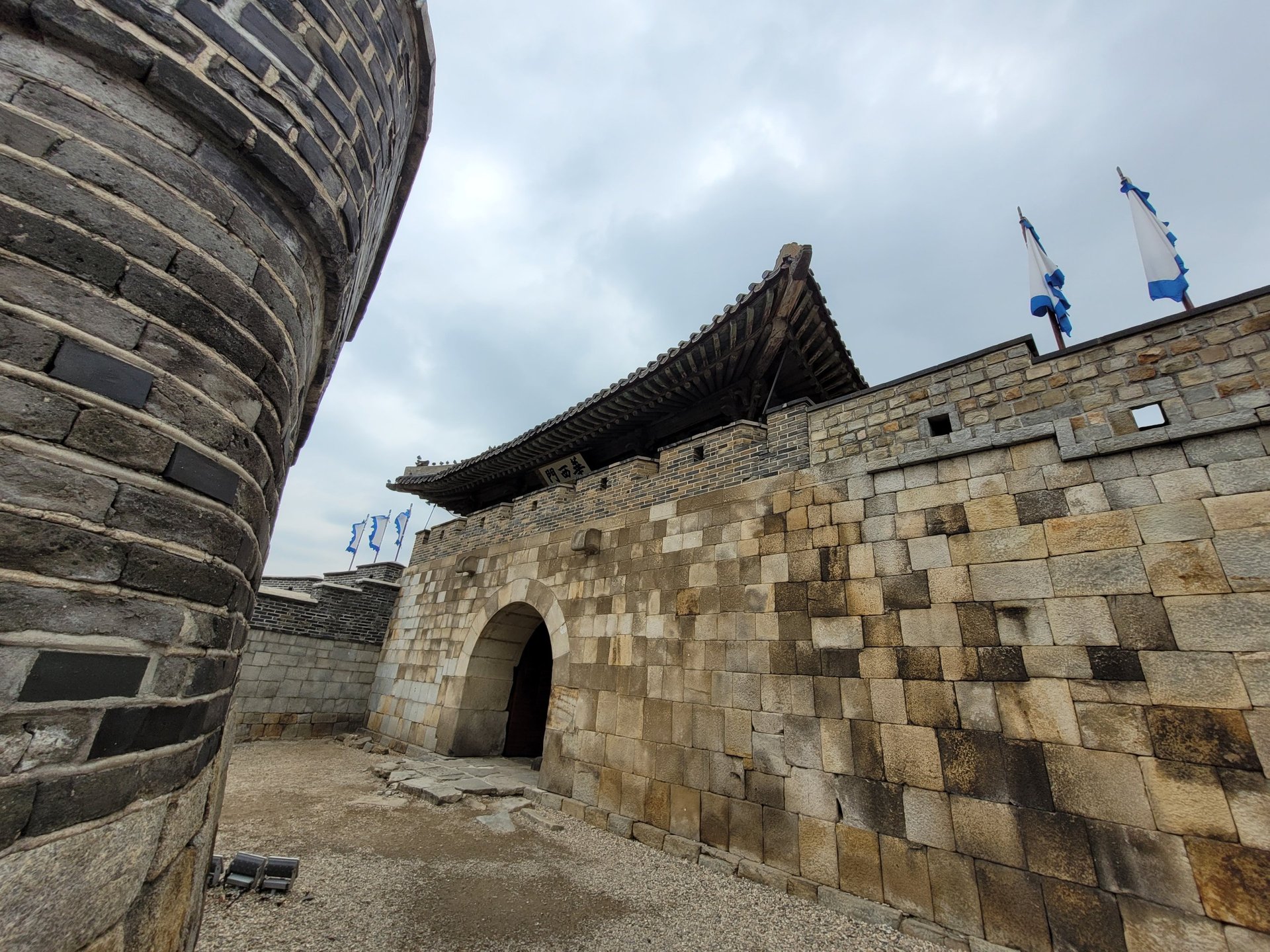
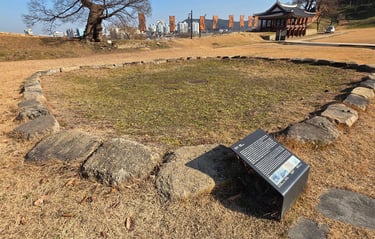
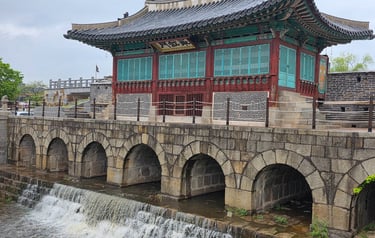
Out of all the cultural heritage sites in South Korea, Hwaseong Fortress in Suwon remains a favourite. As soon as you arrive, it becomes very clear why it is a UNESCO World Heritage Site. The Joseon Dynasty fortress is made up of different parts that today seem unconnected. There is a wall, which extends for almost 6km, and numerous buildings. The eastern section is the largest remaining part of the wall and that alone has a gate, two corner pavilions, an archery platform, a guard pavilion, and a command post. You can take a stroll along the path by the wall to explore the buildings, take in superb views of the surrounding areas, or you can head to the other side of the wall for a ground view. The ground view is particularly nice in the evening when the light is dimming or in the spring and summer when the flowers around the fortress and pond are in bloom. The eastern section wall walk takes you to the northern watergate, which sits in a very picturesque fashion over the Suwoncheon Stream.
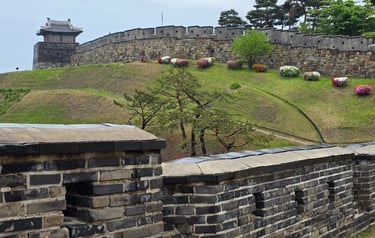
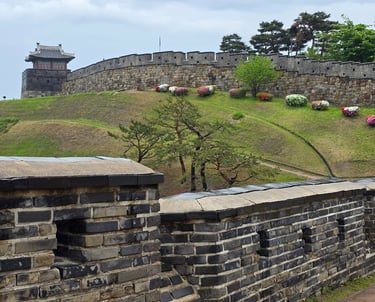
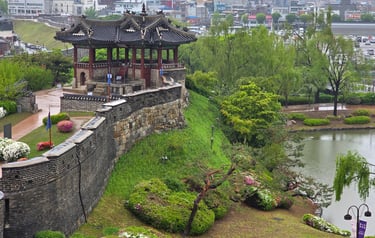
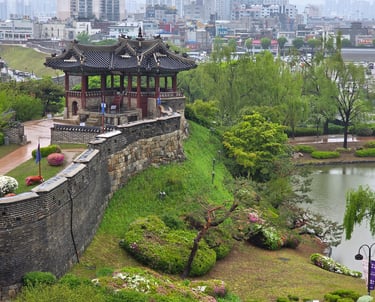
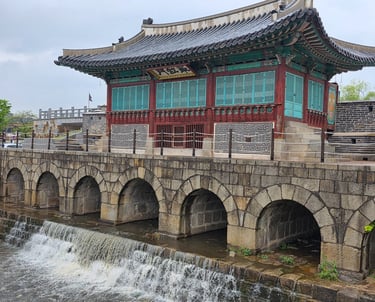
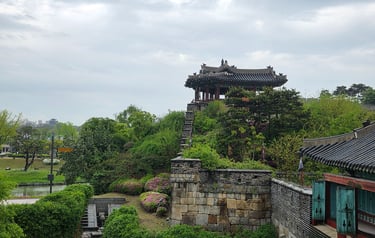
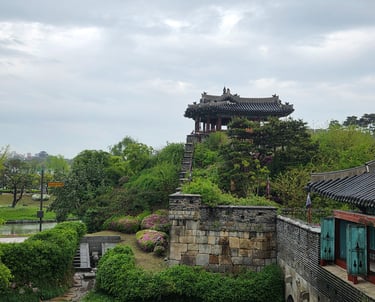
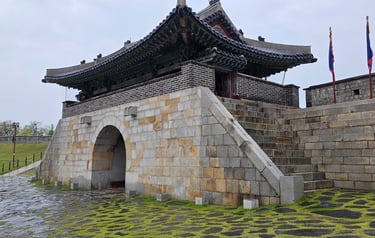
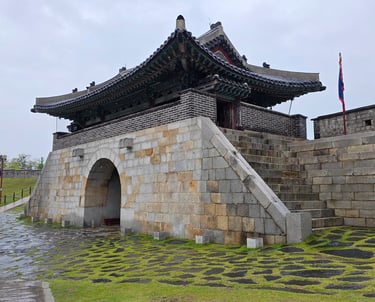
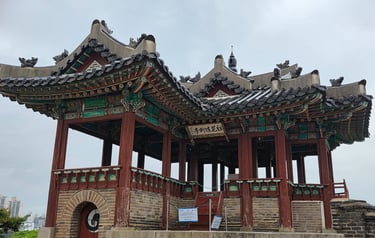
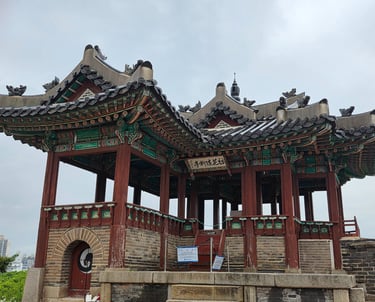

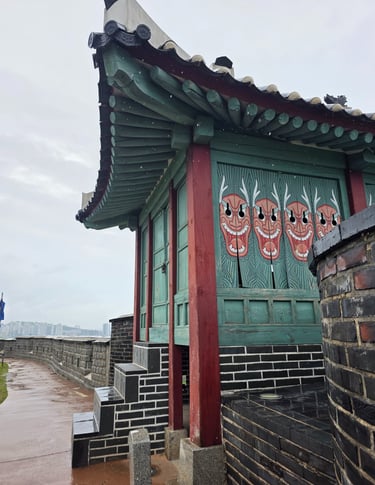
There is so much more to the fortress than the eastern section however, and that can get a little confusing. If you are using public transport from Suwon Station for example, it is very possible that you will come across the south gate, which stands alone and in the middle of a very busy road that is surrounded by shopping streets. There are other gates and remains at different locations around the city, but you do need to know their location as there is no clear signage giving directions around the different areas. There is a tourist office at the eastern section of the fortress where you can pick up a map. There is also a Hwaseong Fortress Tourist Trolley that can take visitors on a 40-50-minute tour of different parts of the fortress and Hwaseong Haenggung, which is a nearby temporary palace. The tour may not run in adverse weather conditions and it does not cover all parts of the fortress, but it can be really useful in getting around different areas. The whole fortress is worth a visit, but if you are only able to visit one part, then do make it the eastern section, which is the largest, has more facilities, and offers really beautiful views.
Namhansanseong Fortress
Namhansanseong is a Joseon (1392-1897) dated fortress that lies around 15 miles outside of Seoul. It was built as an emergency capital by a Buddhist monk army in the seventeenth century in readiness for a war with the Manchu Qing dynasty. The fortress served as both a defensive structure and a capital capable of housing 4,000 inhabitants. Although many of its structures were destroyed during Japanese occupation and the Korean War, some buildings and the fortress walls survive. You can hike up the mountain from its base or take a bus to the rotunda, which is inside the fortress and close to the start of the start of several fortress hiking trails. Namhansanseong was inscribed as a UNESCO World Heritage Site in 2014 as evidence of a major change in mountain fortress design that went on to influence future constructions and as an exceptional example of a fortified city.


Seoul City Wall
Hanyangdoseong, otherwise known as Seoul City Wall, was built in 1396 when the country's capital moved to Hanyang (present day Seoul). The wall is around 11.5 miles long, and snakes around high points on the four main mountains that surround Seoul. Several trails are suggested that show different parts of the wall and other places of interest. When walking along the wall you will see four different construction methods, showing distinct changes in techniques employed between the late fourteenth century and the early nineteenth century. There are also inscriptions in various places, giving different types of information relating to wall construction. It is also well worth visiting the Seoul City Wall Museum which is near Dongdaemun, as it provides valuable contextual information.


