Buyeo's Baekje Historic Areas
HERITAGE SITES
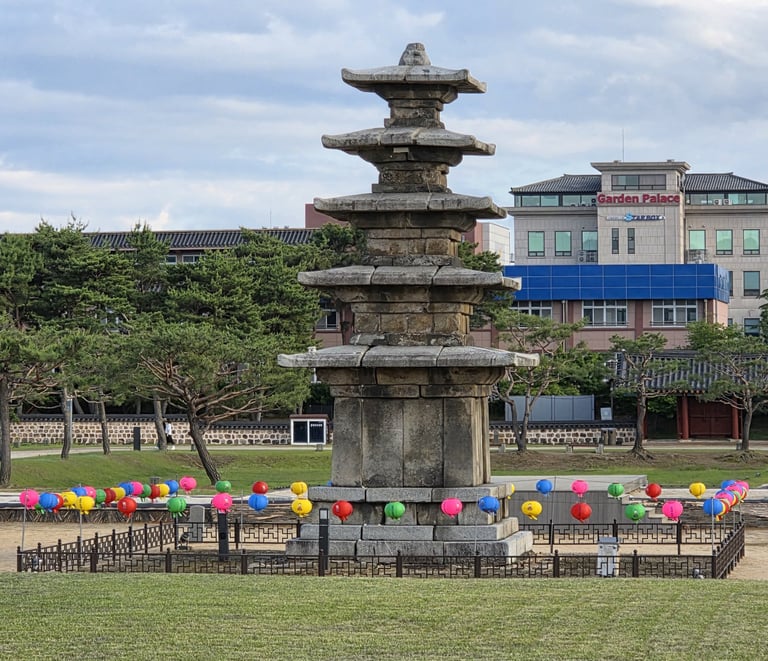
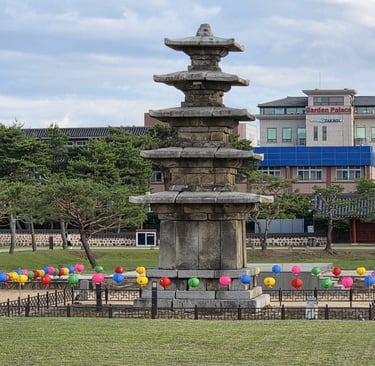
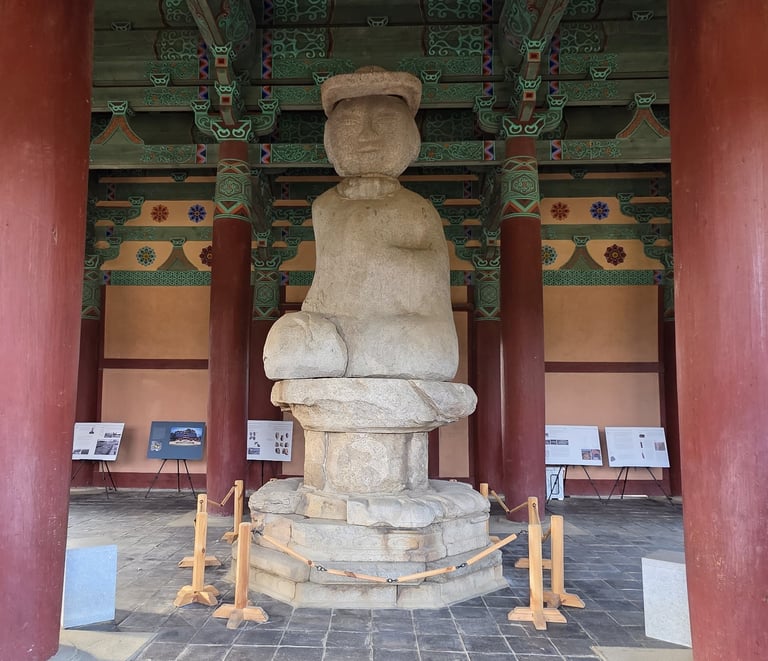
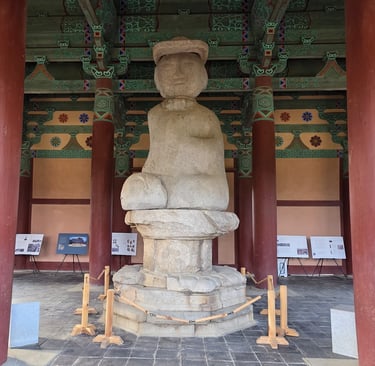
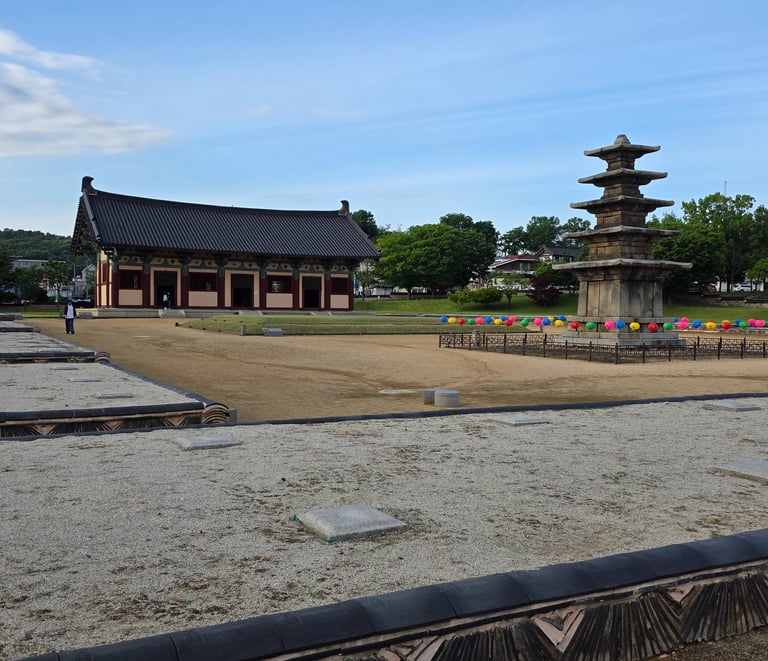
The town of Buyeo (Buyeo-eup) is quite small and does not have its own train station, but it is very easy to get there. You can either take a train to nearby Nonsan (where you can see Donam Seowon, part of the UNESCO listing for Seowon, Korean Neo-Confucian Academies) and then get a local bus which takes around 30 minutes, or you can get an intercity bus if you aren’t travelling by car. Bus is an excellent choice as the Buyeo Intercity Bus Station is within easy walking distance of Busosanseong/ Wanggung-ri and the Jeongnimsa Temple site, although they are in opposite directions. Only for the Neungsan-ri Royal Tombs/Naseong fortress Wall site do you need a bus or taxi, which takes around 15 minutes. Before you leave the bus station area, it is worth stocking up on supplies as most sites (Jeongnimsa excluded) don't have shops nearby. I didn’t arrive in Buyeo until around 5pm, so my first stop was Jeongnimsa Temple. The other sites close at around 6pm, whilst Jeongminsa is usually accessible much later. However, there is a small on-site museum at Jeongnimsa, so if you want to visit that you need to arrive earlier. The temple itself exists only as archaeological remains, including two water reservoirs that today look like ponds complete with water lilies. There is also a five-storey stone pagoda, known as the Baekje Five-story Pagoda and one of only two pagodas surviving from the Baekje period. The site does have one recent construction, which was built to protect a Goryeo Dynasty (918-1392) stone seated Buddha. My visit was just before Buddha's birthday, so the temple and surrounding area were decorated with lots of colourful lanterns.
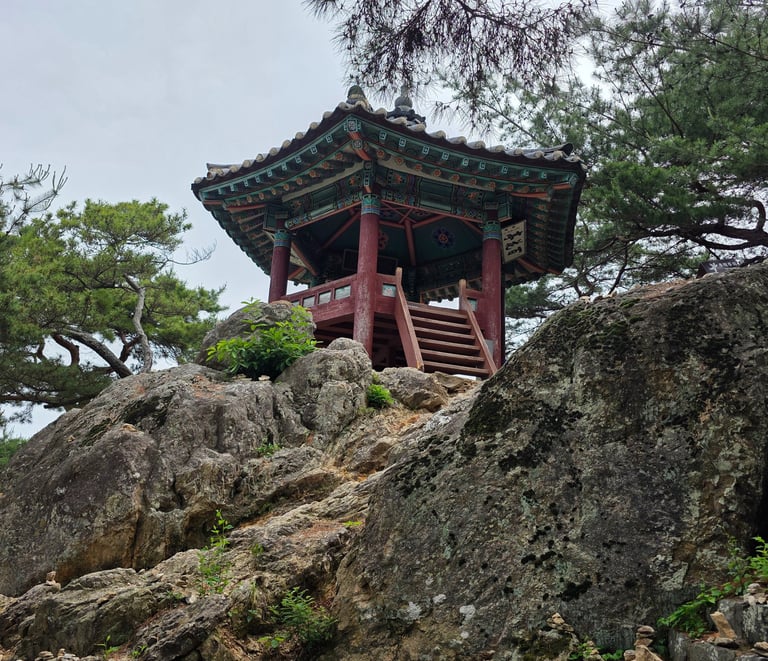
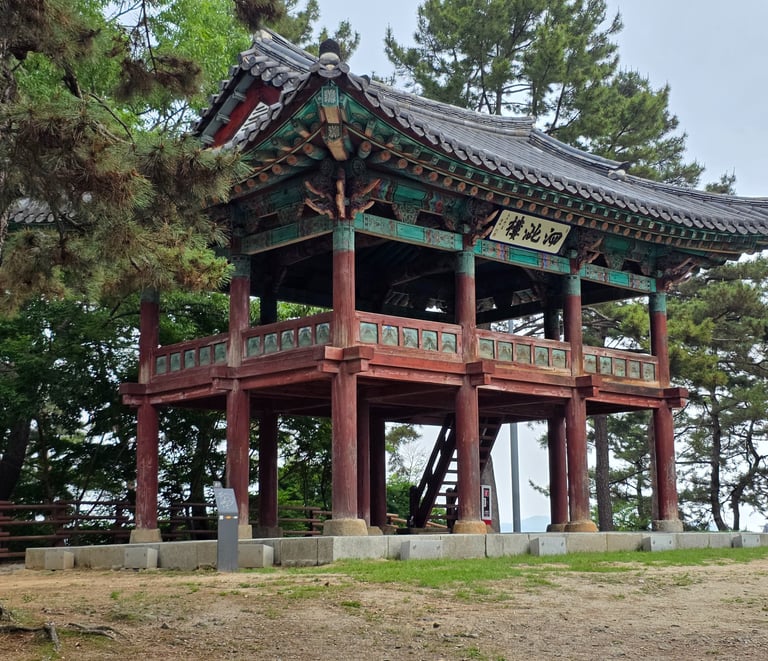
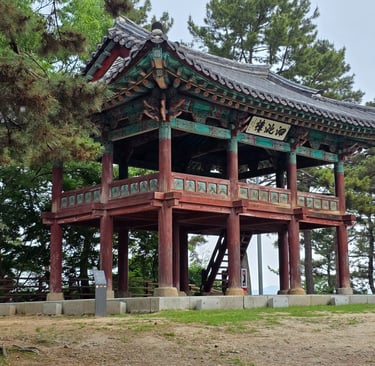
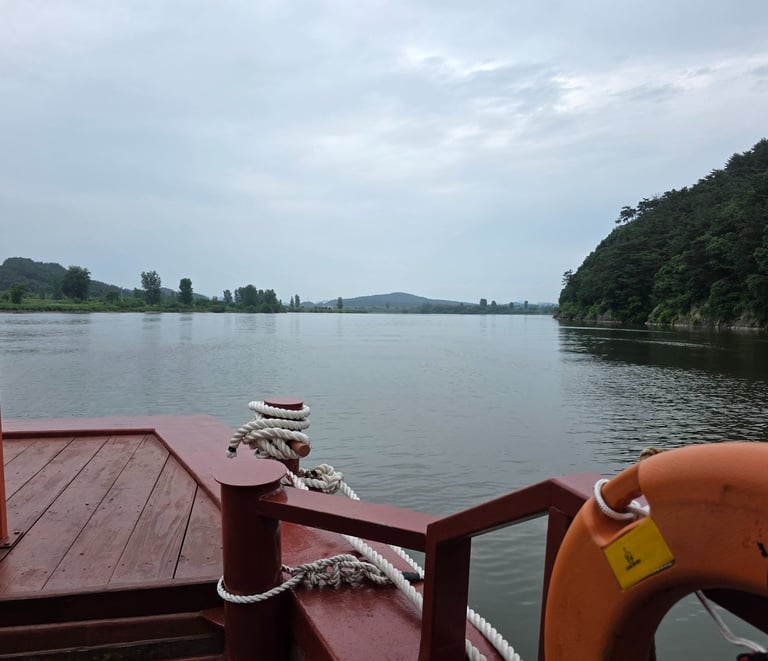
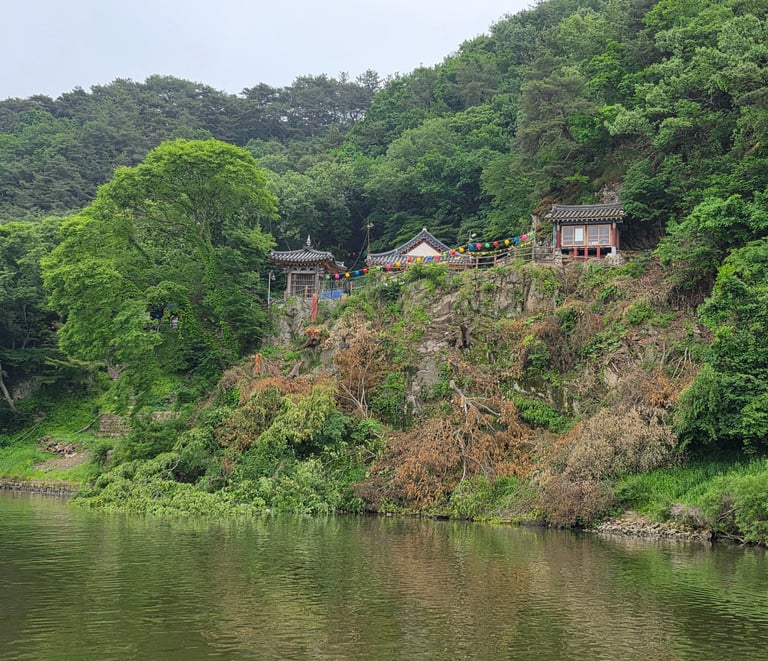
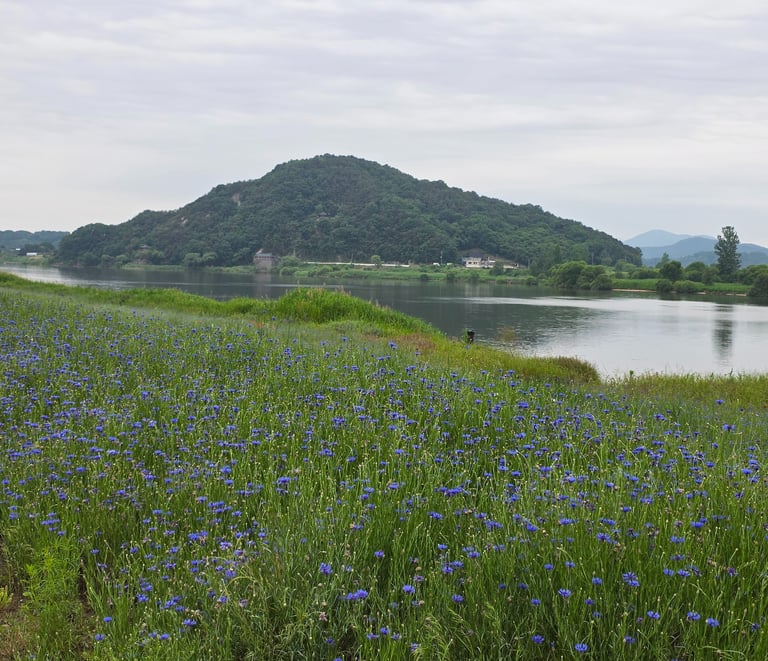
The plan was to have an early start the following morning, and arrive at Busosanseong for its 9am opening. However, I arrived a little early so decided to explore the area and came across signposting for Gudeurae Ferry Dock. After a walk of about 10 minutes I came to a very scenic spot on the Baegmagang (river) and saw a ferry dock with boats and a few tourists buying tickets. As a boat was due to set off at 9am for its approximately 50-minute journey, I decided to buy a round trip ticket before heading to Busosanseong. It is definitely something I would recommend - a really nice experience with beautiful scenery for a very reasonable price. The boat made various stops along the river and one of those was at Goransa, a cliffside temple which is renowned for having spring water that brings good luck for three years. I had not realised when I got on the boat that Goransa was also an old entrance to Busosanseong, so instead of completing my round trip I decided to disembark and after visiting Goransa, having a drink of its lucky spring water and receiving some snacks from a very kind Korean family that I had met on the boat, I made my way up what seemed like the never ending steps that took me to the highest points of the fortress. Busosanseong is set over a vast area on Mount Busosan. It is a beautiful location but can be tough going, especially in the hot weather, so you need to dress comfortably, wear sensible shoes and pack water. Although it dates from the Baekje Kingdom there are much later structures within the fortress area and this can be a little confusing if you don't know Korean history well, so you need to read the interpretation panels as you explore. For example, on top of the famous Nakhwaam Rock is Baekwajeong Pavilion, a 1929 construction built to commemorate Baekje royal court women who are said to have thrown themselves off Nakhwaam when a Baekje dated invasion ended in defeat, whilst the 1919 built Sajaru Pavilion sits on the highest peak and offers spectacular views of the surrounding area. There are many paths and routes to explore within Busosanseong, as well as places to relax or eat a picnic, so I would allow at least a few hours to have a good look around. I spent just over two hours exploring without stopping for any breaks. Once you get back to street level and head out of the main entrance/exit to Busosanseong, you will see the Wanggung-ri archaeological remains. A small section sits inside the fortress area, but most of the remains are outside and are accessible at any time. From there I headed back to the intercity bus station area, which is about 10 minutes away on foot, and had lunch before getting a taxi to the Neungsan-ri Royal Tombs/Naseong Fortress Wall area.
Last weekend was my second visit to Buyeo. I visited last summer, but had to cut my site visits short due to unnaturally hot and uncomfortable weather. Last week was the first chance I had to return and as I was there overnight, I decided to visit or revisit all of Buyeo’s UNESCO World Heritage Sites which are protected under the Baekje Historic Areas listing. Baekje Historic Areas is made up of different Baekje Kingdom (18 BCE to 660 CE) sites located in present day Buyeo, Gongju and Iksan. Buyeo has the most sites in the listing, with five, whilst Gongju and Iksan each have two. The Buyeo sites are Busosanseong Fortress, the Wanggung-ri archaeological site, the Jeongnimsa Temple site, the Neungsan-ri Royal Tombs and Naseong Fortress Wall. Although there are five named sites, they are situated at only three locations, with Busosanseong and Wanggung-ri being next to each other and Neungsan-ri Royal Tombs and the Naseong Fortress Wall being on the same site along with the Neungsan-ri Temple site. The Neungsan-ri Temple site is not part of the UNESCO listing but it is famous as being the location where the gilt-bronze incense burner of Baejke was found and is definitely worth a look. In fact you can't avoid it if you are visiting the wall and tombs as the temple site sits between the two.
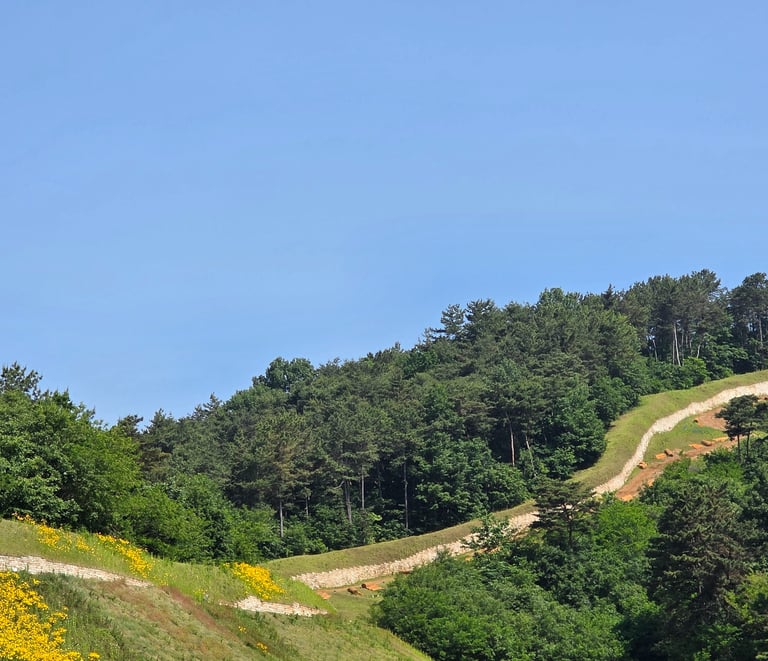
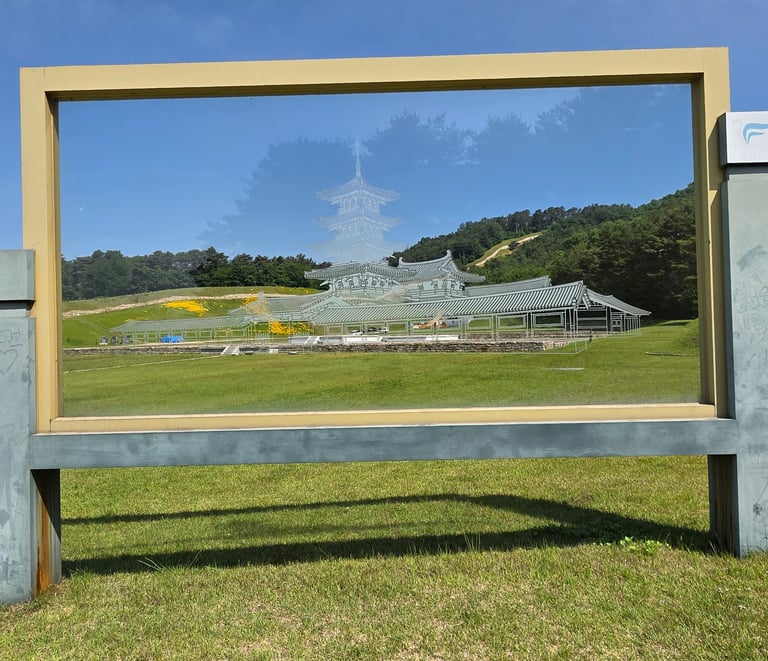
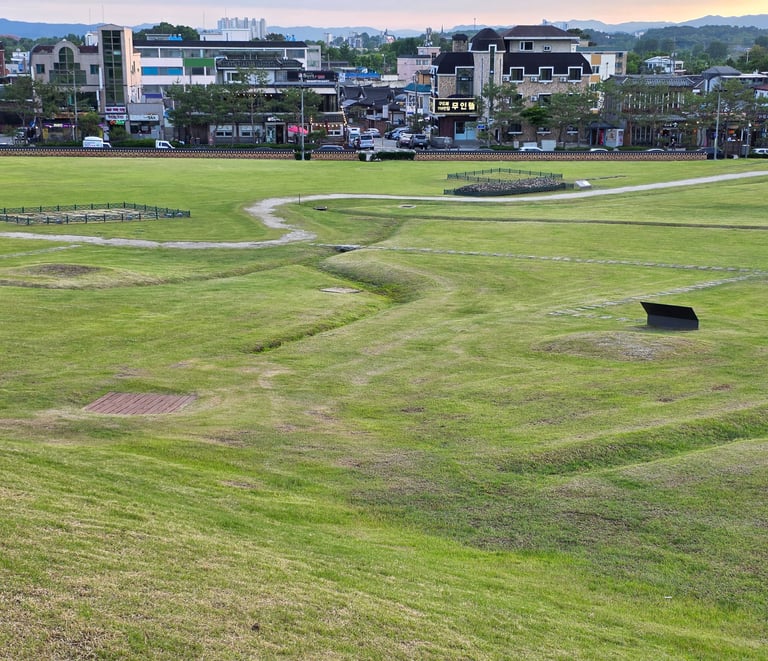
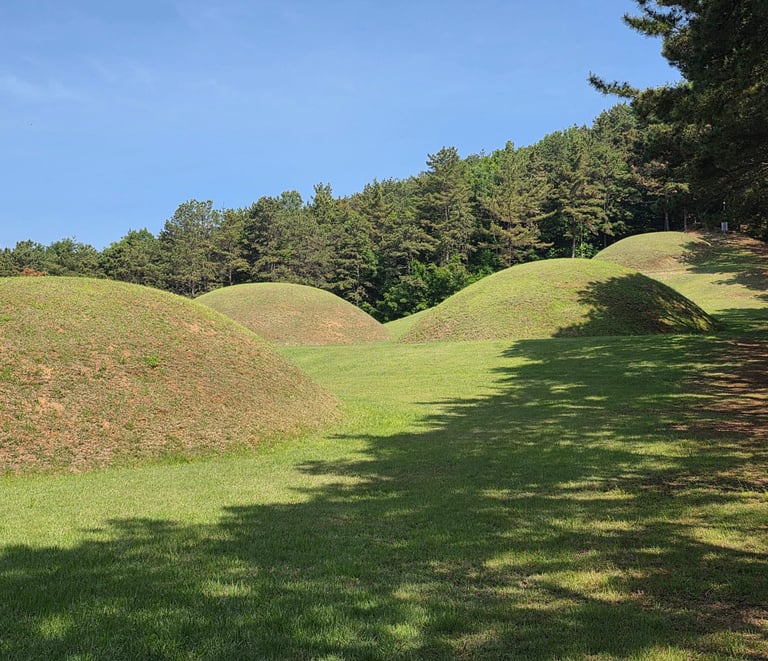
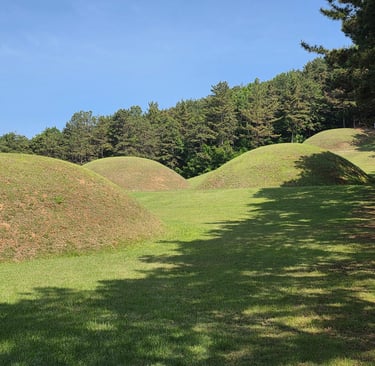
The Neungsan-ri Royal Tombs/Naseong Fortress Wall area is around 15 minutes away from the Intercity Bus Station by bus or car. The tombs are known locally as Buyeo Royal Tombs Park, and within this area you will find the Neungsan-ri tombs, the Naseong Fortress Wall and the Neungsan-ri Temple site. There is also a small art museum which presents VR experiences related to the tombs and the modern Sungmokjeon Shrine which houses the memorial tablets of Baekje Sabi period kings - King Onjo, King Seong, King Wideok, King Hye, King Beop, King Mu and King Uija. The first area you will see when entering the site is the tombs. In total there are 16 tombs, all of which have stone chambers within their earthen mounds, and seven of these are protected. Some tombs have been left open so the inner area can be viewed or accessed. A short walk will take you to the Neungsan-ri Temple site, which is not part of the UNESCO listing but is classified as a Historic Site by the Korea Heritage Service. The temple was built in 567 and is believed to have been abandoned less than 100 years later with the fall of the Baekje Kingdom. Today all that remains are traces of the temple foundations and water channels with 2 small bridge areas, but the site interpretation, in the form of a whiteboard style glass panel with a temple etching, works really well in allowing the visitor to understand what the temple and location might have looked like. Right next to the temple remains you will see the Naseong Fortress Wall, which was around 8km long and runs along the whole side of the site before sloping upwards and disappearing into a large wooded area.
Although it is possible (but likely exhausting) to see all of these sites in a single day, I would definitely recommend an overnight visit as there are also other places to explore in the area - Buyeo National Museum, the beautiful Gungnamji Pond and Baekje Culture Land. If you are interested in Korea's history and national cultural heritage, and specifically the Baekje Kingdom, then Buyeo is a great place for a visit and is not too far from the other Baekje areas of Gongju and Iksan.